
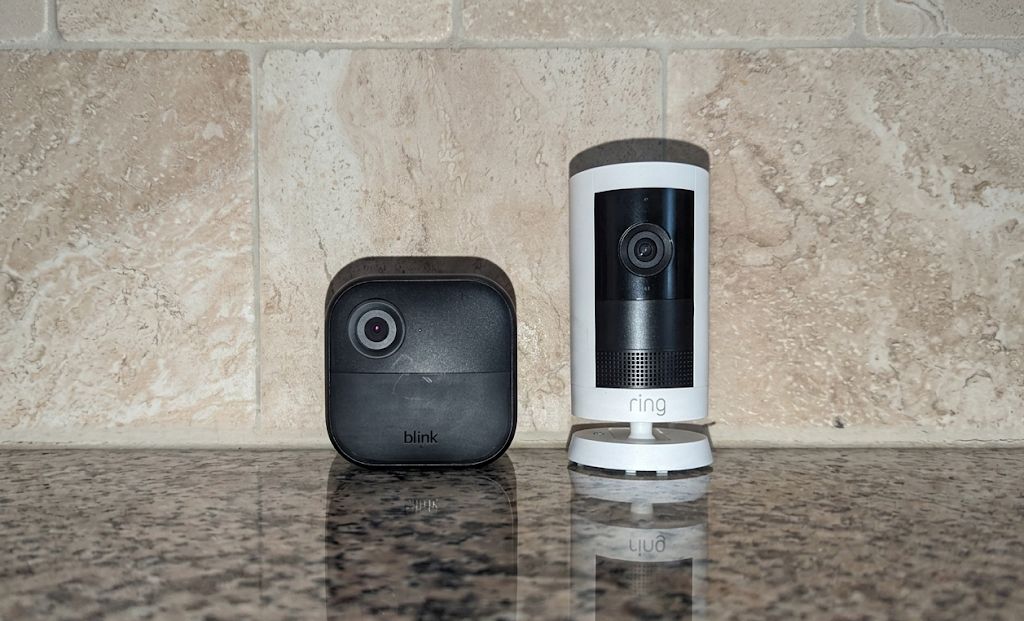
Ring and Blink are two of the most popular home security camera brands on the market, and both happen to be owned by Amazon. They both integrate with Alexa, both offer motion alerts and two-way audio, and both are DIY-friendly. So which one is actually right for you? The short answer is that Ring is built for capability and a broader ecosystem, while Blink is built for simplicity and low cost. This Ring vs Blink guide breaks down exactly where each brand wins, so you can choose the right one for your home without second-guessing yourself.
Quick Verdict
Choose Blink if: you want the lowest hardware cost, genuinely long battery life on AA batteries, and a simple one-app setup with optional free local storage via the Sync Module.
Choose Ring if: you want color night vision, a broader camera lineup, advanced motion features like 3D radar detection, or you plan to eventually add a Ring Alarm system.
The Basics: Two Brands, Two Different Philosophies
Amazon acquired Ring in 2018 and Blink later that same year. Despite sharing a parent company, the two brands have remained distinctly separate in product development, app, and pricing strategy. Blink’s entire identity is built around affordable cameras with exceptional battery life. Ring, in contrast, competes more broadly with its own alarm system, professional monitoring option, and a wider range of camera hardware including floodlights, spotlights, doorbells, and indoor models.
In practice, this means the two brands serve different buyers. Blink appeals to someone who wants a few outdoor cameras, minimal monthly costs, and easy setup. Ring appeals to someone who wants a more complete security solution that can grow over time.
Ring vs Blink Camera Lineups Compared
Blink’s current lineup is focused and concise. The Blink Outdoor 2K+ is the current flagship battery camera, delivering 2K video with color night vision in low light, 4x zoom, noise-canceling two-way audio, and up to two years of battery life on standard AA lithiums. The Outdoor 4 remains available at a lower price for buyers who only need 1080p. The Mini 2K+ handles indoor plug-in coverage with 2K resolution and a built-in spotlight. Blink also offers a Video Doorbell and a Floodlight Camera, though the overall selection is narrower than Ring’s.
Ring’s lineup is considerably larger. The Ring Outdoor Cam Plus is Ring’s current mainstream outdoor camera, delivering 2K video with Low-Light Sight for full-color night vision even with minimal ambient lighting. It mounts anywhere and runs on battery or plug-in power. The Spotlight Cam family adds dedicated LED spotlights for brighter color nighttime video, and the Floodlight Cam steps up to 2,000-lumen floodlights for driveways and garages. In May 2026, Ring also launched the Spotlight Cam 2nd Gen and Floodlight Cam 2nd Gen, bringing Retinal 2K video to more of the lineup. The Indoor Cam and Pan-Tilt Indoor Cam round out indoor coverage.
| Feature | Blink | Ring |
|---|---|---|
| Flagship outdoor camera | Outdoor 2K+ (2K, color night vision) | Outdoor Cam Plus (2K, Low-Light Sight) |
| Battery type | Standard AA lithium (swappable) | Rechargeable proprietary pack |
| Battery life (outdoor) | Up to 2 years | 6–12 months typical |
| Color night vision | Yes (Outdoor 2K+, Mini 2K+); Outdoor 4 is IR only | Yes (Outdoor Cam Plus, Spotlight Cam and above) |
| Local storage (no sub) | Yes, via Sync Module + USB drive | No (cloud subscription required to save clips) |
| Single-device subscription | Basic: ~$3.99/mo per camera | Basic: ~$4.99/mo per device |
| Multi-device subscription | Plus: ~$10/mo unlimited devices | Plus: ~$10/mo unlimited devices (one location) |
| Cloud storage duration | 60 days | 60–180 days (plan dependent) |
| Alarm system integration | No | Yes (Ring Alarm + professional monitoring) |
| Alexa integration | Yes | Yes |
| Google Home / HomeKit | No | No |
| US-only availability | Yes (US and UK only) | No (available worldwide) |
Battery Life: Blink’s Biggest Advantage
Battery life is where Blink pulls decisively ahead of Ring. The Outdoor 4 runs on two standard AA lithium batteries and is rated for up to two years with typical use. That rating holds up in practice for cameras in moderate-traffic locations. At busy spots like a front door facing a street, expect closer to six to twelve months, but that is still considerably longer than Ring’s approach.
Ring uses a proprietary rechargeable battery pack that typically needs recharging every six to twelve months depending on activity. The recharge process requires either removing the battery and plugging it in separately or buying a solar panel add-on. For most people this is a minor inconvenience, but it does mean periodically taking the camera offline. Furthermore, swapping in fresh AA batteries, as you can with Blink, takes about thirty seconds without any downtime.
If low-maintenance battery management is a priority, Blink wins this category without much debate.
Video Quality: Ring Has More Options
The Blink Outdoor 2K+ delivers 2K video with color night vision in low ambient light, switching to infrared black and white only when conditions get very dark. The Mini 2K+ matches that indoors with a built-in spotlight for color night vision. The Outdoor 4 remains in the lineup at a lower resolution for budget buyers, but its nighttime footage is infrared only.
Ring’s mid-range and upper-tier cameras deliver considerably more flexibility here. The Spotlight Cam line includes built-in LED spotlights, which illuminate the camera’s view and produce full-color nighttime video. The Floodlight Cam takes that further with 2,000 lumens of light output, more than enough to light up a driveway or backyard in color. The higher-end Spotlight Cam Pro adds 3D motion detection using radar, which provides more precise detection and Bird’s Eye View zones to map movement around your property. In addition, Ring’s 2026 Spotlight Cam 2nd Gen and Floodlight Cam 2nd Gen bring Retinal 2K video to more affordable models across the lineup.
For outdoor use where color night vision matters, Ring has the edge. For buyers who don’t care about color night vision and just need solid 1080p motion recording, Blink is completely adequate.
Subscriptions and Storage
Both brands offer similar subscription pricing at the entry and multi-device tiers. Blink’s Basic plan runs approximately $3.99 per month per camera, while Ring’s Protect Basic is approximately $4.99 per month per device. Both offer a multi-device plan at approximately $10 per month that covers unlimited cameras at a single address. Annual plans reduce those costs modestly for both brands. For a full breakdown of what each tier includes, see our Blink subscription plan guide and our Ring Protect plan guide.
Blink’s local storage advantage: Blink cameras can save motion clips locally at no monthly cost by connecting a USB flash drive to the Sync Module. Ring has no equivalent option — saving and reviewing recorded footage requires a paid subscription. For buyers who want a clip history without a monthly bill, Blink is the only choice between these two brands.
It is worth noting what you get from each brand with no subscription at all. With Blink, live view and motion alerts remain fully functional, and local storage via the Sync Module means you still get a recorded clip history. With Ring, live view and motion alerts are also free, but there is no way to save or review recorded footage without a subscription. If reviewing footage after the fact matters to you, Ring requires a paid plan. Blink does not. We covered this in detail in our best security cameras with no subscription roundup.
Ecosystem and Smart Home Integration
Both Blink and Ring integrate natively with Amazon Alexa, allowing voice control and live view streaming to Echo Show devices. Neither brand supports Apple HomeKit or Google Home natively, which rules them both out for households built around those platforms.
Where Ring pulls ahead is ecosystem depth. Ring offers its own alarm system, a professional monitoring service, video doorbells, smart lighting, and an in-app neighborhood alert feature called Neighbors. Additionally, Ring Protect Pro includes 24/7 professional monitoring and cellular backup for the alarm system. For buyers who want to build a layered home security setup, Ring provides a more complete platform that all connects through a single app.
Blink, in contrast, is a cameras-only ecosystem. There is no alarm, no professional monitoring, and no broader smart home hardware beyond the cameras and doorbells. That is not necessarily a weakness. For buyers who only want cameras, Blink’s narrower focus keeps things simpler and less expensive. However, if you anticipate wanting door sensors, motion detectors, or professional response services in the future, Ring gives you a path to that without switching brands.
Setup and App Experience
Both brands have improved their app experience considerably over the past few years. The Blink app is generally considered simpler, with a clean layout that prioritizes ease of use over advanced configuration. Motion sensitivity, activity zones, and clip length are all adjustable, though the feature set is thinner than Ring’s.
One consistent Blink quirk worth noting: during live view, the app prompts you to tap a “continue” button every thirty seconds. This is a battery-preservation measure, but it makes extended live monitoring sessions mildly annoying compared to Ring’s uninterrupted live view.
The Ring app is more feature-rich, offering Bird’s Eye View on Pro models, motion frequency controls, linked devices (so a doorbell ring activates a nearby camera), and more granular notification settings. As a result, Ring has a modestly steeper learning curve, but most buyers will work through the options within the first day of setup.
Who Should Choose Blink
Blink is the right choice for buyers who want the lowest total cost of ownership. The hardware is less expensive, battery replacements use standard AA lithiums rather than proprietary packs, and local storage via the Sync Module eliminates the need for a subscription entirely. Additionally, for renters or anyone who moves frequently, Blink’s wireless-first design and simple setup make it easy to redeploy cameras without much effort.
The Blink Outdoor 2K+ is the natural starting point for most buyers. It includes the Sync Module, 2K video with color night vision in low light, and up to two years of battery life on standard AA lithiums.
Who Should Choose Ring
Ring is the right choice for buyers who want more from their security setup. Color night vision, floodlight integration, 3D motion detection, and the option to eventually add a full alarm system with professional monitoring all live on the Ring side of the fence. Furthermore, Ring’s wider availability internationally and larger camera selection give more flexibility for unusual installation scenarios like garages, large driveways, or multi-story homes.
For a capable and flexible starting point, the Ring Outdoor Cam Plus delivers 2K video with Low-Light Sight for full-color night vision, works indoors or outdoors, and is available in battery or plug-in form.
Bottom Line
Blink wins on price, battery life, and subscription-free storage. Ring wins on video quality options, ecosystem depth, and advanced motion features. Both are solid choices, but they serve different priorities. For most buyers who want a simple, affordable outdoor camera system with minimal ongoing costs, Blink is hard to beat. For buyers who want color night vision, smart lighting, or the option to eventually build out a full home security setup, Ring is the stronger platform to invest in.
Neither brand is the wrong choice. The right one depends entirely on what you actually need from a camera.
For individual reviews see the Blink Outdoor 4 review and the Ring Outdoor Cam Plus review. For subscription plan details see the Blink subscription guide and the Ring Protect plan guide. For brand-specific guides see the Blink hub and the Ring hub.