
Tapo Care has changed substantially in 2026. TP-Link now offers three US subscription levels: Tapo Cloud, Tapo Cloud Advanced and Tapo Cloud Advanced AI. The least expensive plan provides 30 days of cloud event history for one or two devices. The two higher levels cover unlimited compatible devices, extend video history to 180 days and, at the top level, add the Aireal suite of cloud-based AI tools.
The subscription remains optional. A compatible Tapo camera can still provide live view, notifications, two-way audio, local recording and supported on-device detection without Tapo Care. The real question is whether off-site video, longer retention or advanced AI analysis solves a problem that local storage does not.
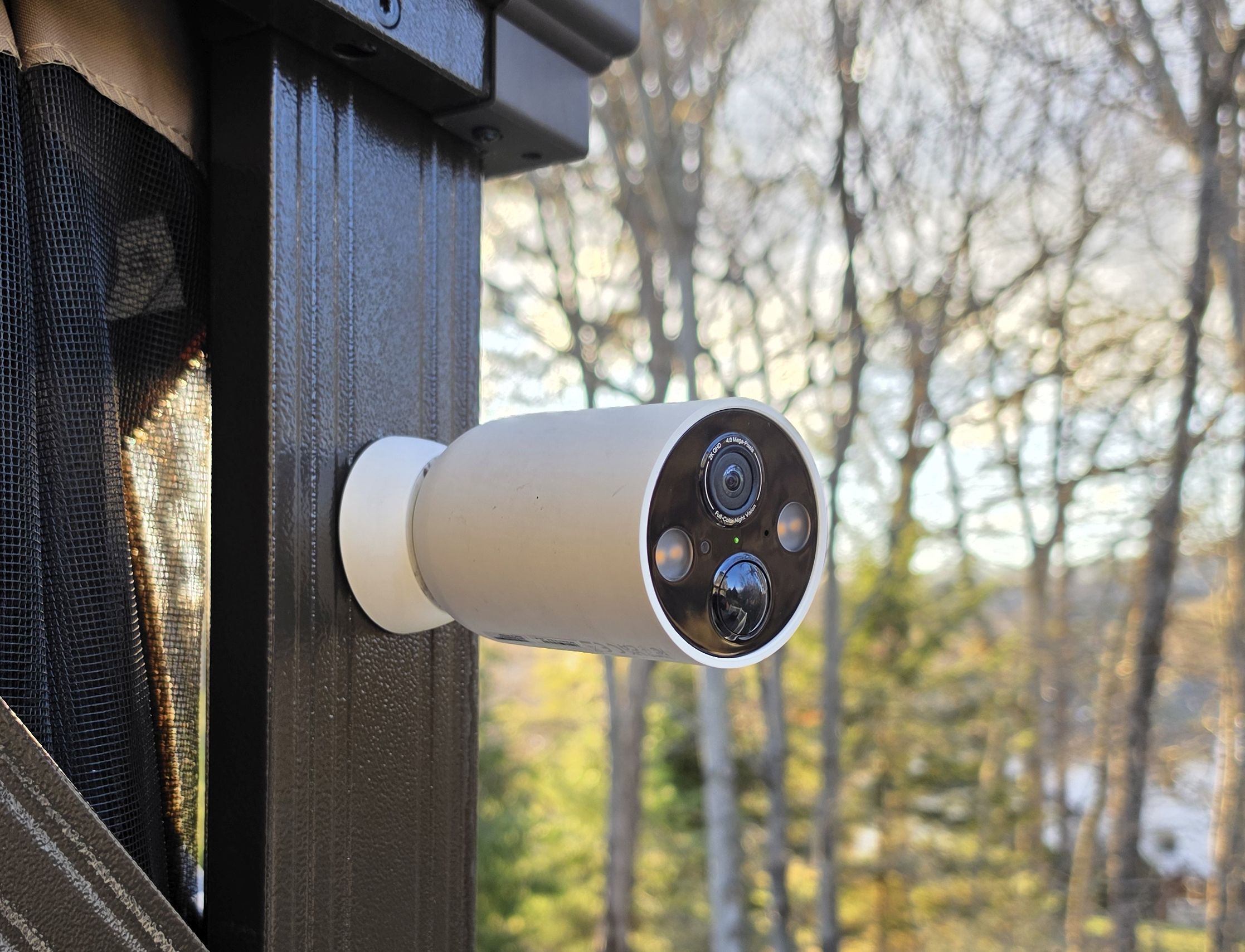
Table of Contents
Quick answer: Tapo Cloud is enough for one or two cameras when you mainly want off-site clips and snapshot alerts. Cloud Advanced is the practical choice for a larger system or 180-day retention. Cloud Advanced AI is for people who will use facial recognition, natural-language video search, intelligent summaries and the full Aireal assistant.
What Tapo Cameras Include for Free
Tapo does not require a subscription for basic camera operation. Compatible models provide live view, instant notifications, two-way audio, activity zones, motion detection and local storage without a paid plan. Many recent cameras include person detection, while pet, vehicle, package, sound and other detection types depend on the model.
Recent Tapo cameras commonly accept microSD cards up to 512GB, but capacity and recording modes vary by model and hardware version. Local recordings can normally be reviewed remotely in the Tapo app while the camera is powered and online. You do not need cloud storage simply to watch a saved microSD clip away from home.
Our Tapo Care vs. Tapo Hub vs. microSD guide explains the local-storage options and where each one makes sense.
Tapo Care Cost and Plan Comparison
Current US pricing starts at $3.49 per month or $34.99 per year for Tapo Cloud. Cloud Advanced costs $11.99 per month or $119.99 per year, while Cloud Advanced AI costs $19.99 per month or $199.99 per year.
| Plan | US Price | Devices | Cloud History | Best For |
|---|---|---|---|---|
| Tapo Cloud | From $3.49 monthly $34.99 annually |
Up to 2 | 30 days | Small installations |
| Tapo Cloud Advanced | $11.99 monthly $119.99 annually |
Unlimited compatible devices | Up to 180 days | Larger systems and longer retention |
| Tapo Cloud Advanced AI | $19.99 monthly $199.99 annually |
Unlimited compatible devices | Up to 180 days | Aireal and cloud AI features |
Check before paying: TP-Link says prices, promotions and plan availability can differ between the Tapo app and web portal. Existing subscribers may also retain an older plan until they cancel or switch. Compare both checkout methods using your TP-Link ID.
What Tapo Cloud Includes
The entry plan stores eligible event clips for 30 days. It also provides rich notifications with snapshots, Smart Filters, weekly reports and smarter event organization. The snapshot is useful because you can judge an alert without opening the app and waiting for the live feed.
Cloud recording is off-site. If a thief removes an outdoor camera and takes the memory card, clips uploaded before the camera went offline remain in the Tapo account. This is the strongest reason to subscribe when the camera is mounted within reach.
What Tapo Cloud Advanced Adds
Cloud Advanced changes both scale and retention. It covers unlimited compatible devices under one subscription, stores supported video at up to 4K and extends event history from 30 days to as long as 180 days. It also adds improved playback controls and enhanced event organization.
TP-Link also associates 24/7 cloud video storage with Cloud Advanced on supported equipment. Do not assume every camera can upload continuously. Battery cameras, unsupported models, connection speed and individual recording settings can limit availability. Confirm the feature on the exact camera before choosing the plan for continuous recording.
What Tapo Cloud Advanced AI Adds
Cloud Advanced AI includes Cloud Advanced storage and adds TP-Link’s full Aireal AI suite. Instead of merely classifying an event as a person or vehicle, Aireal is designed to explain activity, summarize groups of recordings and find clips from natural-language requests.
| Advanced AI Feature | What It Does |
|---|---|
| Intelligent Summaries and Daily Summary | Condenses recorded activity into readable overviews. |
| Video Recap | Creates a shorter review of important recorded events. |
| AI Video Search | Finds relevant footage using conversational descriptions. |
| Cloud Facial Recognition | Identifies recognized people where the feature is supported and legally available. |
| Risk Level Assessment | Evaluates recorded activity to help prioritize events. |
| Intelligent Notifications | Adds context intended to make alerts more useful. |
| AI Chat | Lets you ask Aireal questions about cameras and recorded events. |
Where Aireal is available, free accounts and subscribers to Tapo Cloud or Cloud Advanced receive limited Aireal access with up to 50 chats per day. Cloud Advanced AI increases the allowance to 250 chats per day and unlocks the complete AI feature suite. Each message counts as one chat, may contain up to 250 characters, and the allowance resets on a rolling 24-hour cycle beginning with the first message.
Compatibility matters: Aireal features depend on the camera, firmware, account and region. Cloud facial recognition is unavailable or restricted in some jurisdictions. Treat the plan description as the maximum feature set, not a promise that every Tapo camera receives every function.
Local Storage vs. Tapo Care
| Consideration | Local Storage | Tapo Care |
|---|---|---|
| Ongoing fee | None after buying storage | Monthly or annual |
| Remote playback | Normally available while the camera is online | Available even after the camera goes offline |
| Camera stolen or damaged | Recordings stored with it may be lost | Previously uploaded clips remain off-site |
| Internet outage | Compatible cameras may continue recording | New uploads require connectivity |
| Advanced AI | Model-dependent onboard detection | Full cloud AI requires Advanced AI |
The strongest setup uses both forms of storage. A high-endurance microSD card can keep recording during an internet interruption, while cloud storage preserves eligible event clips away from the camera.
The Tapo D225 illustrates why the two approaches complement each other. It can record locally to a compatible microSD card, including continuous recording when properly hardwired, while optional Tapo Care preserves eligible event clips in the cloud.
Which Tapo Care Plan Should You Choose?
Choose Tapo Cloud if you have one or two exposed cameras and want an inexpensive off-site copy, 30 days of history and snapshot alerts.
Choose Cloud Advanced if you have several cameras, want up to six months of event history, require up to 4K cloud storage or have a compatible installation that can use continuous cloud recording.
Choose Cloud Advanced AI if you specifically want Aireal’s video search, summaries, facial recognition and intelligent alerts. At $80 more per year than Cloud Advanced, it only makes sense if those tools will be used.
Who Should Skip Tapo Care?
Skip the subscription if your camera is in a protected location, you are satisfied with local playback and the free detection supported by your model, and you do not need an off-site copy. A camera used mainly for live viewing in a garage, nursery or indoor room may gain little from a cloud plan.
Bottom Line
Tapo Care now ranges from basic cloud backup to a whole-home AI service. Tapo Cloud is a sensible, inexpensive safeguard for one or two vulnerable cameras. Cloud Advanced offers the strongest practical value for a multi-camera system because it combines unlimited device coverage with 180-day retention. Cloud Advanced AI is a premium upgrade for people who want Aireal to search, summarize and interpret their footage. None of the plans replaces the value of local recording, and none is required for a compatible Tapo camera to perform its basic security functions.
Frequently Asked Questions
Does Tapo Care have an AI plan?
Yes. Tapo Cloud Advanced AI includes Aireal AI Chat, intelligent summaries, video recap, AI video search, intelligent notifications, risk assessment and cloud facial recognition where supported.
How long does Tapo Care keep cloud recordings?
Tapo Cloud keeps eligible event clips for 30 days. Cloud Advanced and Cloud Advanced AI extend retention to as long as 180 days.
How many cameras does Tapo Care cover?
Tapo Cloud covers one or two devices depending on the selected option. Cloud Advanced and Cloud Advanced AI cover unlimited compatible devices under one subscription.
Do Tapo cameras work without Tapo Care?
Yes. Supported Tapo cameras provide live view, notifications, two-way audio, local recording and model-specific smart detection without a subscription.
Can Tapo microSD recordings be viewed remotely?
Normally, yes. The owner can review local recordings in the Tapo app while the camera is online. Tapo Care adds an off-site copy that remains available after the camera is disconnected, damaged or stolen.
Does the Tapo Care trial automatically become paid?
TP-Link’s current US plan guide says the 30-day trial converts to a paid subscription unless canceled. Review the terms shown for your account before activating because trial behavior can vary by region and offer.
Related: TP-Link Tapo Security Camera Reviews and How to Share a Tapo Camera.