
One of the best features on a Nest Cam is the ability to receive motion alerts the moment something happens at home. However, anyone who has owned one for more than a week knows the flip side of that feature: false motion alerts. A tree branch sways, a car passes on the street, or the porch light kicks on at dusk, and suddenly your phone is buzzing for nothing. This guide covers exactly how to eliminate false motion alerts on a Nest Cam using the free tools built into the Google Home app, plus what the paid Google Home Premium tier adds on top.
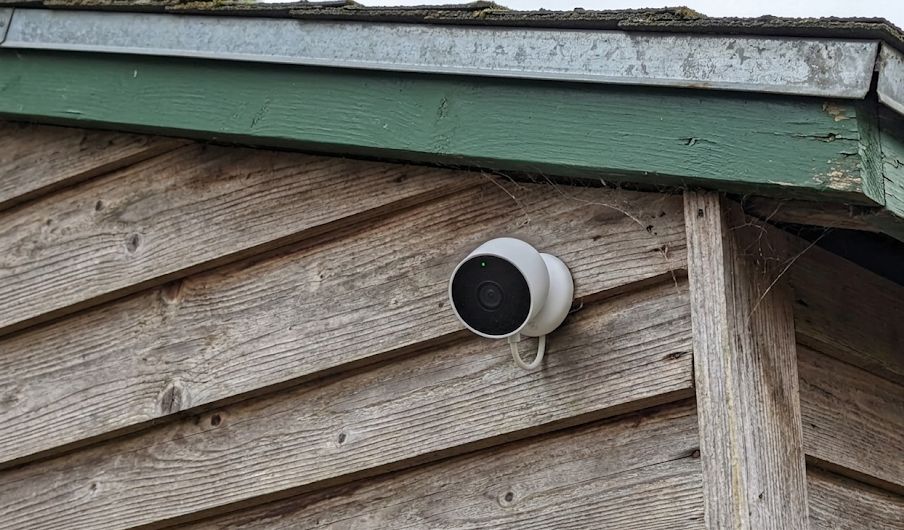
False alerts used to drive me nuts after mounting my own Nest Cam (Battery) under the eave outside my front door. In the beginning, I picked up my phone every single time a motion notification came through, only to find out the alert fired because a shadow moved or a moth landed near the lens. Eventually I started ignoring the alerts altogether, which defeats the entire purpose of owning a security camera. As a result, I spent some time working through every setting the Google Home app offers for cutting down on noise, and the good news is that most of the effective tools do not require a subscription.
Activity Zones Are Free and Make the Biggest Difference
The single most effective tool for eliminating false motion alerts on a Nest Cam is Activity Zones, and unlike the original Nest Cam era, this feature is now free on every current Nest Cam model. Activity Zones let you draw a specific area within the camera’s frame, for example a driveway or front walkway, and the camera will only alert you to motion inside that zone. A tree that sways in the wind just outside the zone boundary will no longer trigger a notification, since the camera ignores everything outside the area you have defined.
To set up Activity Zones, open the Google Home app, tap your camera, then tap Settings, then Events, then Seen Events. From there, tap Add a Zone to draw an area directly on a still image of the camera’s view, and tap Confirm to save it. After the zone is created, go back to the camera’s Notifications settings, select the zone, and turn off notifications for any event types you do not want from that area. In addition, you can revisit Seen Events and tap Outside of Zone to choose which alerts you still want from everything outside the zone you just defined. This two-step process trips people up the first time, since drawing the zone alone does not change your alerts. You also have to go back into Notifications and tell the app what to do with that zone.
Furthermore, you are not limited to a single zone. You can create separate zones for different purposes, such as one zone covering the driveway for vehicle alerts and a second zone covering the front door for person alerts, each with its own notification rules.
Quick fix: If leaves or a flag are the main culprit, draw your Activity Zone tight around the doorway, walkway, or driveway instead of including the whole yard. The smaller and more specific the zone, the fewer false triggers you will see.
Smart Alerts for People, Animals, and Vehicles
Every current Nest Cam, including the Nest Cam (Battery) and the Nest Cam (Wired, indoor), includes built-in intelligence that distinguishes between people, animals, and vehicles. This is a free feature and does not require a subscription. Therefore, you can go into the alert settings for each camera and choose to receive notifications only for the categories that matter to you. If your yard regularly attracts squirrels or a neighbor’s cat, turning off animal alerts while keeping person and vehicle alerts active will cut out a large share of the noise immediately.
Lighting changes are another common source of false alerts, particularly indoors when a lamp turns on or sunlight shifts through a window. The smart alert categories help here as well, since the camera is looking for an actual person, animal, or vehicle shape rather than simply reacting to a change in brightness across the whole frame.
That said, Google itself acknowledges these algorithms are not perfect. A t-shirt printed with a picture of a dog can occasionally trigger an animal detection event, and a person crawling or bending low to the ground is sometimes misread as a pet. These edge cases are rare, but worth knowing about if you see an alert that does not quite match what is in the frame.
Don’t Forget Sound Alerts
Motion is not the only thing that triggers a Nest Cam notification. If the microphone is turned on, the camera can also send an alert when it picks up sound, even if nothing is moving in the frame. A barking dog, a slammed car door, or a passing motorcycle can all generate a sound alert independent of motion detection. If you find yourself getting notifications that do not line up with anything visible in the clip, sound detection is often the cause.
To adjust this, open the Google Home app, tap your camera, then tap Settings, then Audio. From here you can turn the microphone off entirely, which stops both audio recording and sound alerts, or you can leave the microphone on for live two-way audio while turning off audio recording specifically, which removes sound-based alerts without losing the ability to listen in or talk through the camera. In contrast to motion zones, sound alerts do not currently support the same kind of area-based filtering, so the choice is generally binary: sound alerts on or off for that camera.
Use Home and Away Settings to Cut Out Household Activity
If most of your false alerts are actually just you, your family, or your pets moving around indoors, the fix is not a better algorithm, it is simply not monitoring an occupied house. The Google Home app lets you set notifications to fire only when your home is set to Away, rather than constantly, which is especially useful for indoor cameras. This way, the camera still works exactly the same in terms of detection, but you are not getting pinged about your own dog walking through the living room while you’re sitting on the couch.
To set this up, open the camera’s Notifications settings and choose the option for notifications only when no one is home rather than always. Most homes with phones connected to the same account can use location-based presence detection to switch between Home and Away automatically, so you do not have to remember to toggle it manually every time you leave.
Camera Placement Still Matters
Before relying entirely on software settings, it is worth reconsidering where the camera is mounted. For example, a camera aimed directly at a tree, a busy sidewalk, or a road will generate far more motion events than one angled toward a doorway or driveway. I mounted mine under the eave near the roofline rather than out in the open, which keeps the field of view tighter on the approach to the house instead of sweeping across the whole yard. In addition, cameras placed behind glass can pick up reflections and glare that the motion algorithm sometimes misreads as movement. Repositioning the camera, even by a few degrees, often reduces false alerts more than any individual software setting.
What Google Home Premium Adds
Nest Aware was rebranded as Google Home Premium, and it is no longer required to access Activity Zones or smart person, animal, and vehicle alerts since those are now free. That said, the subscription still adds a few features relevant to alert accuracy. Familiar face detection, available on the paid tiers, lets the camera recognize people who appear regularly and label them by name in the alert instead of simply saying a person was detected. This will not reduce the number of alerts you receive, but it does make each alert more informative at a glance, which can help you decide whether to actually open the app.
If you want a full breakdown of what each Google Home Premium tier costs and includes, we cover that in detail in our Google Home Premium plans and pricing guide. For most people dealing specifically with false motion alerts, however, the free tools above will solve the majority of the problem before a subscription ever becomes necessary.
Frequently Asked Questions – How to Eliminate False Motion Alerts on a Nest Cam
Do Activity Zones work the same on the battery and wired Nest Cam models?
Yes. Activity Zones, smart person and animal and vehicle alerts, and the Home and Away notification setting all work the same way on both the Nest Cam (Battery) and the Nest Cam (Wired, indoor). The setup screens are identical in the Google Home app regardless of which model you own.
I set up an Activity Zone, but I’m still getting alerts from outside it. What went wrong?
This is the most common mistake. Drawing the zone only marks the area, it does not change your notifications by itself. After saving the zone, you have to go back into the camera’s Notifications settings, select that zone, and manually turn off the event types you no longer want to be alerted about from that area.
Why am I getting alerts with nothing visible in the clip?
This usually points to a sound alert rather than a motion alert. Check the event type in the Google Home app’s activity feed. If it is a sound event, the camera picked up a noise such as a slammed door or a passing vehicle even though nothing crossed the frame.
Does a Google Home Premium subscription make Activity Zones more accurate?
No. Activity Zones and the underlying person, animal, and vehicle detection run the same way whether or not you subscribe. The subscription adds familiar face labeling and extended video history, but it does not change how accurately the camera filters motion within a zone.
The verdict: Activity Zones, smart person and animal and vehicle alerts, and Home and Away based notifications are all free on every current Nest Cam, and together they eliminate the vast majority of false motion alerts. Start by tightening your Activity Zone boundaries, then turn off alert categories you do not need, and check your sound alert settings if clips do not match what triggered them. A subscription adds convenience features like familiar face labeling, but it is not required to stop the false alerts themselves.
For the full individual reviews see the Nest Cam troubleshooting guide and the Google Home Premium plans and pricing guide. For brand-specific guides see the Google Nest Cam reviews hub.