
Arlo cameras are excellent at detecting motion — sometimes too excellent. A busy driveway, a tree branch in the frame, or a neighborhood cat can turn a security camera into a notification machine. The good news is that the Arlo Secure app gives plenty of tools to quiet things down without losing the alerts that actually matter. Here’s how to take control of Arlo alert notifications and filter out the noise.
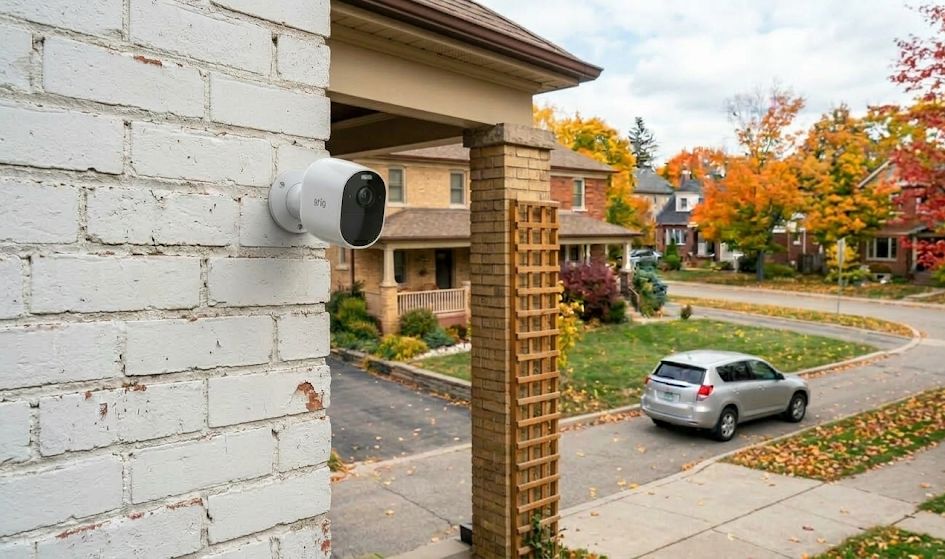
How Arlo Delivers Notifications
Arlo sends alerts in two main ways: push notifications to the Arlo Secure app on a smartphone, and email alerts to whatever address is tied to the account. Both can be enabled or disabled independently per camera, so it’s easy to get push notifications for one camera while routing another’s alerts to email only. Additionally, Arlo’s animated preview feature — available with a paid Arlo Secure plan — lets a short video clip expand right from the lock screen without needing to open the app, which makes it faster to assess whether an alert is worth acting on.
Step 1: Adjust Motion Sensitivity
The fastest way to reduce alert volume is to dial back motion sensitivity. By default, Arlo cameras are set fairly aggressively and will trigger on small movements like blowing leaves, insects, and passing vehicles at the edge of the frame. Lowering the sensitivity reduces these false triggers without eliminating alerts for things that matter, like a person walking up to the door.
To adjust it, open the Arlo Secure app and tap Devices. Select the camera, then tap Default Mode Settings → Motion Detection. Move the sensitivity slider toward the lower end and save. Arlo also includes a Motion Detection Test in the same menu — walk in front of the camera at a distance of 5–10 feet and increase the slider until the camera’s LED starts blinking. That level is a reliable starting point for sensitivity. Furthermore, the same settings screen allows audio sensitivity to be adjusted independently, or disabled entirely if sound-triggered alerts aren’t needed.
Tip: Start at a low sensitivity setting and increase gradually. It’s easier to add sensitivity than to track down why important alerts are being missed after setting it too low.
Step 2: Use AI Object Detection (The Biggest Upgrade)
The single most effective way to reduce nuisance alerts is to enable AI-powered object detection through an Arlo Secure plan. Instead of alerting on any motion, the camera uses cloud-based AI to identify what triggered the event — a person, a package, a vehicle, or an animal — and sends a notification that specifies what was detected. This means the system can be configured to only send alerts when a person is detected, while silently recording a vehicle or animal that passes by without pinging the phone.
In practice, this one feature does more to manage notification volume than any sensitivity adjustment. A camera pointed at a busy street, for example, can ignore the constant traffic and only alert when someone approaches on foot. Package detection is particularly useful — the camera can send a distinct notification when a delivery is dropped off, which is a different and more actionable alert than a generic motion trigger.
Step 3: Create Activity Zones
Activity zones let specific areas within the camera’s field of view be designated as the only zones that trigger notifications. Everything outside those zones is still recorded if motion occurs, but no alert is sent. This is especially useful when part of the camera’s view contains a persistent source of false alerts — a sidewalk with heavy foot traffic, a tree that moves in the wind, or a neighbor’s driveway. In those cases, drawing a zone around the front door or garage means only relevant motion generates a notification.
Activity zones are available to Arlo Secure subscribers. To set one up, go to Devices in the Arlo Secure app, select the camera, tap Device Settings, and then select Activity Zones. Draw the zone over the area to monitor and save. Multiple zones can be created per camera for more granular control.
Alerts Worth Keeping On
While motion alerts are the primary focus for most users, a few other Arlo notifications deserve attention and shouldn’t be turned off in the process of quieting things down.
Low battery alerts are arguably the most important notification for anyone using a wire-free Arlo camera. Arlo sends a notification when battery charge drops to 15%, which is the right time to swap or recharge before the camera goes offline unexpectedly. These come through as both push notifications and email — both are worth keeping enabled. A camera that dies overnight is a camera that missed everything that happened.
Camera offline notifications are also worth keeping active. Arlo now sends an alert when a camera goes offline, which is useful for catching Wi-Fi drops, power outages, or — in a worst case — someone tampering with the system. These can be found under Settings → Account → Notifications in the Arlo Secure app.
Advanced audio detection, available on select Arlo cameras with a Secure plan, can alert to specific sounds like a smoke or CO alarm, glass breaking, or a dog barking. For wired cameras used indoors, this adds a meaningful layer of monitoring beyond motion detection.
Notification Controls at a Glance
| Feature | Where to Find It | Subscription Required? |
|---|---|---|
| Motion sensitivity slider | Devices → Camera → Default Mode Settings | No |
| Push / email alert toggle | Devices → Camera → Default Mode Settings | No |
| AI object detection (person, package, vehicle, animal) | Arlo Secure app — enabled via subscription | Yes — Arlo Secure plan |
| Activity zones | Devices → Camera → Device Settings → Activity Zones | Yes — Arlo Secure plan |
| Low battery alert | Automatic at 15% — enabled by default | No |
| Camera offline alert | Settings → Account → Notifications | No |
| Advanced audio detection | Arlo Secure app — select wired cameras only | Yes — Arlo Secure plan |
Bottom Line
For users on the free tier, adjusting motion sensitivity is the primary lever available. However, the real solution to alert fatigue is AI object detection and activity zones — both of which require an Arlo Secure subscription. Together, these two features can reduce nuisance notifications dramatically while ensuring that a person at the front door, a package on the porch, or a low battery still gets through immediately.
Frequently Asked Questions
Can Arlo cameras be set to only alert for people and ignore animals?
Yes, with an Arlo Secure plan. AI object detection allows alerts to be filtered so that only specific categories — people, packages, vehicles, or animals — trigger a notification. In the Arlo Secure app, go to the camera’s mode settings and configure which detection types send alerts.
Is there a Do Not Disturb mode for Arlo notifications?
Arlo doesn’t have a built-in Do Not Disturb feature within the app, but the same result can be achieved using the scheduling or geofencing automation tools to automatically disarm cameras during certain hours — for example, overnight when household movement shouldn’t trigger alerts. Additionally, iOS and Android both have system-level Do Not Disturb settings that can silence Arlo notifications during set times without changing camera behavior.
Will Arlo notify if a camera goes offline?
Yes. Arlo sends push notifications when a camera goes offline and again when it comes back online. These system alerts are separate from motion notifications and can be managed under Settings → Account → Notifications in the Arlo Secure app.
Do activity zones work without an Arlo Secure subscription?
Generally, no. Activity zones require an Arlo Secure subscription for most camera models. The exception is certain wired cameras connected continuously to AC power, which may have limited activity zone functionality without a plan. For battery-powered cameras like the Arlo Pro 6, a subscription is required.