
Choosing the right RV security camera comes down to three realities that home security guides rarely mention: how your rig gets internet on the road, how you power the camera without draining house batteries, and how quickly you can take it down before pulling onto the highway. Whether you park a travel trailer at a seasonal lot, boondock off-grid, or monitor pets inside a motorhome while running errands, the best security cameras for RV travel are compact, weather-sealed, and reliable without requiring permanent holes in your roof or sidewalls.
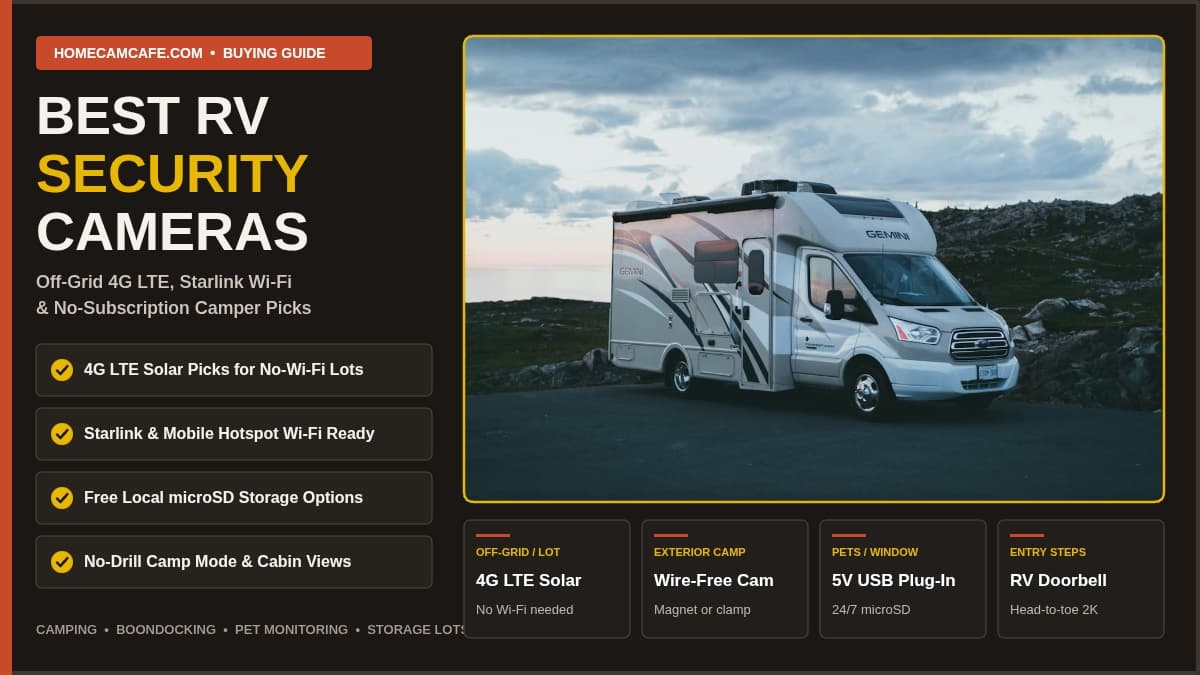
Quick Answer: For camping off-grid or watching a rig in a storage yard with no Wi-Fi, choose the eufy 4G LTE Cam S330 (dual 4G LTE and Wi-Fi solar pan/tilt) or our hands-on tested Defender Frontier 4G. If your camper already has Starlink or a mobile hotspot, the TP-Link Tapo C425 is the top no-subscription wireless RV security camera, while the Wyze Cam v4 is the easiest plug-in pick for interior pet monitoring and through-window views.
Important: This guide covers campsite, boondocking, pet-monitoring, and storage-lot security cameras. If you need a wired rear observation or towing backup camera that stays active while driving down the highway (such as a pre-wired Furrion or dedicated dash monitor kit), you need a driving camera system rather than a motion-triggered RV surveillance camera.
Best RV Security Camera Picks at a Glance
Six of the seven cameras below have been tested hands-on by our team, and the dual-mode cellular pick rounds out the lineup for travelers who bounce between campground Wi-Fi and remote storage lots. Click any camera name in the table to check current availability on Amazon, or jump down to the individual breakdowns for power, connectivity, and subscription details.
| RV Security Camera | Best For | Connection | Power Source | Local Storage / Fees |
|---|---|---|---|---|
| eufy 4G LTE Cam S330 | Dual-Mode 4G LTE + Wi-Fi Travel | 4G LTE + 2.4 GHz Wi-Fi | 9,400mAh battery + solar panel | 32GB microSD included (cellular data plan needed for LTE) |
| Defender Frontier 4G | Hands-On Tested Off-Grid & Storage Lots | 4G LTE cellular only (built-in eSIM) | High-capacity battery + 5W solar panel | Local microSD (Defender 4G data plan required) |
| TP-Link Tapo C425 | Best Overall No-Subscription Wireless | 2.4 GHz Wi-Fi | 10,000mAh battery (optional solar) | Free microSD up to 512GB + free AI |
| Blink Outdoor 2K+ | Compact AA Battery Camp Setup | 2.4 GHz Wi-Fi + Sync Module | 2x AA lithium batteries | Local via Sync Module 2/XR (needs internet) or paid cloud |
| Wyze Cam v4 | Interior Pets & Through-Window View | 2.4 GHz Wi-Fi 6 | 5V USB (shore power or 12V adapter) | Free 24/7 microSD up to 512GB |
| Ring Outdoor Cam Plus | Existing Ring & Alexa Households | Dual-band Wi-Fi 6 | Removable battery (optional solar/USB-C) | Cloud only (Ring plan required for clips) |
| TP-Link Tapo D225 | Best No-Subscription RV Doorbell | 2.4 GHz Wi-Fi | 10,000mAh battery or 8 to 24V AC wired | Free microSD up to 512GB + free AI |
How RV Security Cameras Connect: The Campground Wi-Fi Trap
Before you pick any camper security camera, solve the network question first. Most RVers discover the hard way that free campground Wi-Fi rarely works with smart security cameras for two technical reasons.
First, RV parks almost always use a captive portal splash page where you click an Accept button or enter a campsite password in a web browser. Security cameras do not have web browsers, so they fail during pairing or drop offline the moment the campground lease expires. Second, crowded RV park access points throttle upload bandwidth, which stalls 2K and 4K video feeds when you try to open Live View away from camp.
In practice, reliable RV surveillance camera setups rely on one of three connections:
- Your Own In-Rig Router (Starlink, T-Mobile Home Internet, or Cellular Hotspot): Creates a private 2.4 GHz and 5 GHz Wi-Fi network that travels with your rig. Your cameras stay paired permanently from state to state without re-entering passwords at every stop.
- A Dedicated 4G LTE Cellular Camera: Connects directly to AT&T, T-Mobile, or Verizon cell towers using an internal SIM or eSIM. This is the only way to get live phone alerts when your trailer sits unplugged in a remote storage yard or at an off-grid trailhead.
- Travel Router Bridge (Advanced Workaround): A compact travel router can log into a campground splash page once and rebroadcast a private Wi-Fi network to your cameras, though performance still depends on how congested the park signal is.
If you want a deeper breakdown of how cellular, local microSD, and trail cameras behave when internet service disappears, see our full guide to security cameras without Wi-Fi.
The 7 Best Security Cameras for RVs and Campers
1. eufy 4G LTE Cam S330: Best Dual-Mode 4G LTE + Wi-Fi RV Security Camera
For campers who bounce between full-hookup RV parks with Starlink and remote boondocking sites or unpowered storage yards, the eufy 4G LTE Cam S330 stands out on paper because it is not locked strictly to cellular mode. Its dual-mode radio supports both 2.4 GHz Wi-Fi and 4G LTE, automatically switching over to cellular service if your rig Wi-Fi turns off when you leave the campsite.
Hardware specifications include 4K UHD video, motorized 344-degree pan and 70-degree tilt with AI tracking for people and vehicles, a 100-lumen spotlight for color night vision, a 9,400mAh battery, and an included solar panel so you do not have to run wires into your coach battery bank. The included 3-in-1 SIM card connects across AT&T, T-Mobile, and Verizon depending on the strongest tower at your location, and a 32GB microSD card comes pre-installed (expandable up to 128GB) with no cloud subscription required for recording.
Two practical limits matter before buying. First, like every cellular camera, remote LTE alerts and live streaming require an active cellular data plan, and streaming high-bitrate 4K live view over cellular burns through gigabytes quickly if you leave the feed open. Second, its IP55 rating handles normal rain at camp, so remove it before driving in highway downpours.
View eufy 4G LTE Cam S330 on Amazon →
2. Defender Frontier 4G: Best Hands-On Tested 4G LTE Solar Camera for Storage Lots & Boondocking

If your trailer spends months parked in a remote RV storage lot or you want a dedicated 4G solar pan/tilt camera that we have personally tested outdoors, the Defender Frontier 4G is a proven no-Wi-Fi workhorse. It pairs 2K+ 4MP video and 360-degree motorized PTZ tracking with a built-in eSIM, a 9,200mAh rechargeable battery, a separate 5W solar panel, and an included fastening strap that makes quick non-drilled mounting onto a tree, fence post, or RV ladder simple at camp.
In our hands-on outdoor testing, two details stood out for RV travelers. First, the Frontier maintained reliable 4G alerts and responsive app control even in a weak-signal area showing only one to two bars of cellular reception, which mirrors real-world national forest campgrounds and rural storage yards. Second, its infrared and 6000K spotlight color night vision delivered remarkably clear nighttime footage out to 33 feet, backed by strong human detection, active PTZ tracking, two-way talk, and a local deterrent siren.
Keep two firm rules in mind before ordering. The Defender Frontier 4G is a cellular-only camera (it does not connect to Wi-Fi) and requires an active Defender 4G data plan through the Empower app after the small included trial data runs out. Also take two minutes to read the included quick-start instructions during initial setup and charge the camera indoors for four hours first so the solar panel only has to maintain a full battery.
View Defender Frontier 4G on Amazon → Read Our Defender Frontier Review →
3. TP-Link Tapo C425: Best Overall No-Subscription Wireless RV Security Camera
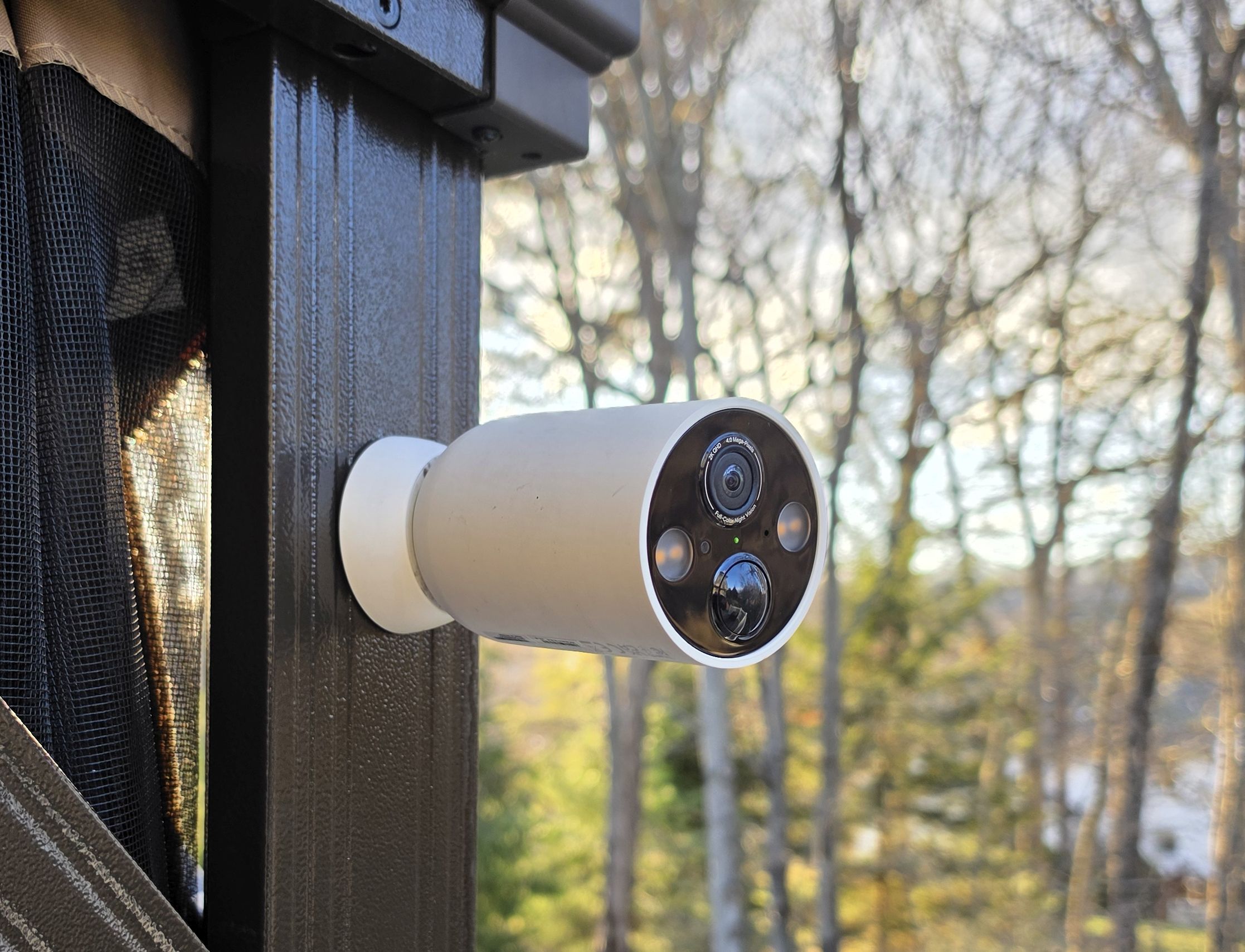
If your motorhome or fifth wheel already runs Starlink or a mobile hotspot, the TP-Link Tapo C425 (MagCam) is the strongest all-around wireless RV security camera for avoiding monthly fees. Unlike Ring or Arlo cameras that lock video history behind cloud plans, the Tapo C425 records 2K QHD motion clips directly to an onboard microSD card up to 512GB and includes free on-device AI detection for people, pets, and vehicles.
What makes the C425 especially useful for RV life is its heavy-duty magnetic base combined with a standard 1/4-inch-20 threaded socket. On Class B steel camper vans, steel rear bumpers, or steel hitch racks, the magnet snaps straight on at camp and lifts right off in two seconds on travel mornings. On fiberglass motorhomes and aluminum travel trailers where magnets will not hold, the standard tripod thread fits common ladder clamps and no-drill camera brackets.
In our hands-on evaluation, the 10,000mAh battery (rated up to 300 days per charge), Starlight color night vision with built-in spotlights, IP66 weatherproofing, and 94 dB siren made it easy to recommend for multi-month trips. You can also pair it with an optional Tapo A200 or A201 solar panel if you park in one spot for the winter. Its main limitations are 2.4 GHz Wi-Fi only and no Apple HomeKit support.
View Tapo C425 on Amazon → Read Our Tapo C425 Review →
4. Blink Outdoor 2K+: Best Lightweight AA-Battery Camera for Campers
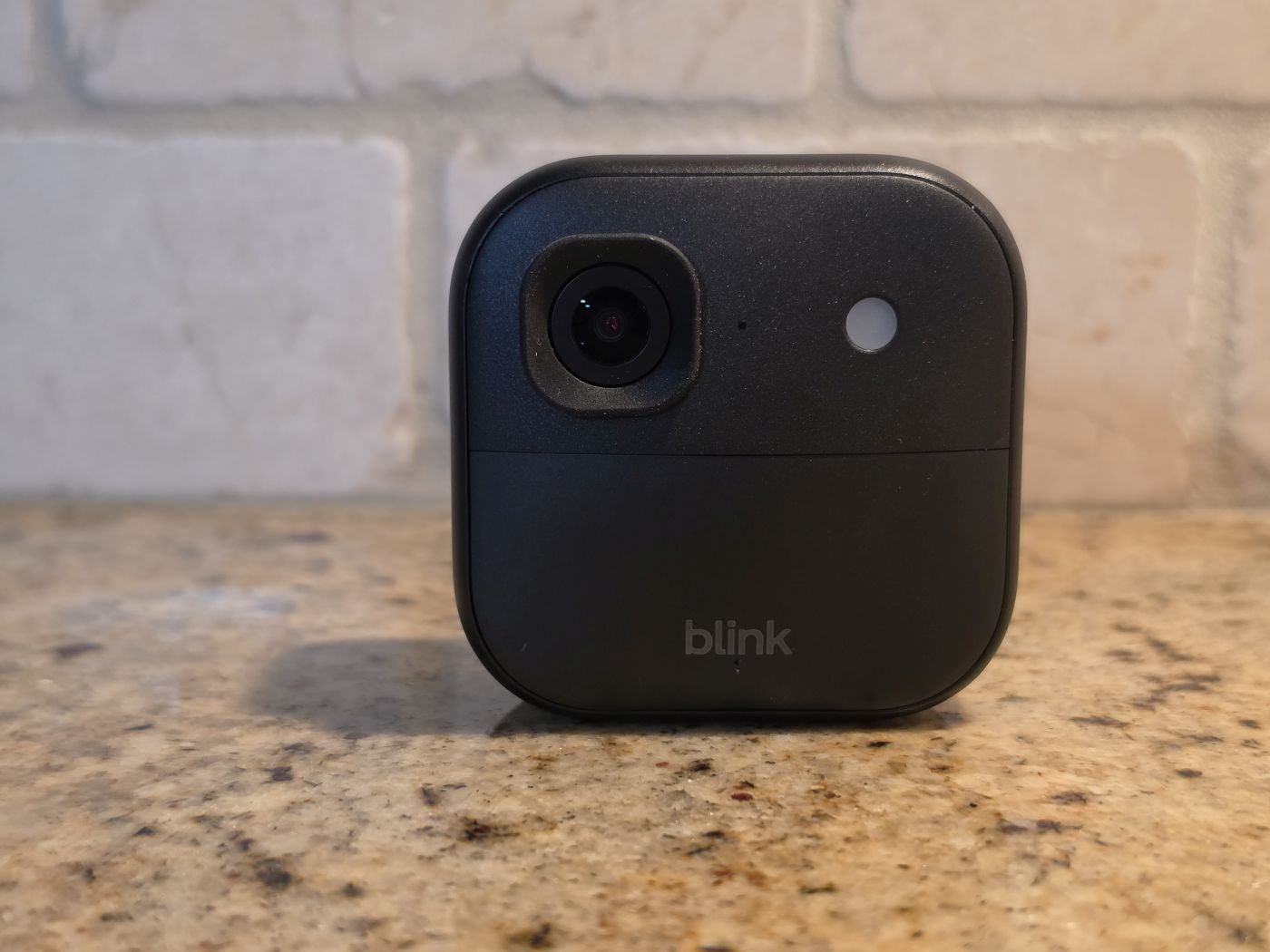
Weight and battery swaps matter when you pack security gear in an RV basement bay. Measuring just 70mm by 70mm by 41mm and running on two disposable AA lithium batteries rated for up to two years of normal motion use, the Blink Outdoor 2K+ is the easiest exterior camper security camera to carry in multiples. When a battery finally runs down mid-trip, swapping two AA cells takes 30 seconds instead of pulling a camera inside to recharge for six hours.
In our hands-on testing, the move from 1080p to 2K (2560 x 1440) resolution delivered noticeably sharper daytime detail and clearer two-way audio with less wind static than our older Blink Outdoor 4. Low-light color vision works well under a campground pedestal light or porch awning LED, then shifts to standard 850nm infrared in pitch darkness.
Pay close attention to the hub included in the box before ordering. Standard Blink Outdoor 2K+ kits ship with the newer Sync Module Core, which has no USB or microSD slot for free local storage. To save clips locally inside your RV without paying for a Blink subscription, pair the camera with a Blink Sync Module 2 (USB flash drive up to 256GB) or Sync Module XR (microSD up to 256GB), or choose the 1080p Blink Outdoor 4 with Sync Module 2 if you want local USB storage out of the box or extended XR wireless range at large sites. Keep in mind that Blink’s Sync Module local storage still needs an active internet connection to save clips, and Person and Vehicle AI alerts require a paid Blink subscription plan.
View Blink Outdoor 2K+ on Amazon → Read Our Blink Outdoor 2K+ Review →
5. Wyze Cam v4: Best Interior RV Cabin, Pet Monitoring & Through-Window Camera
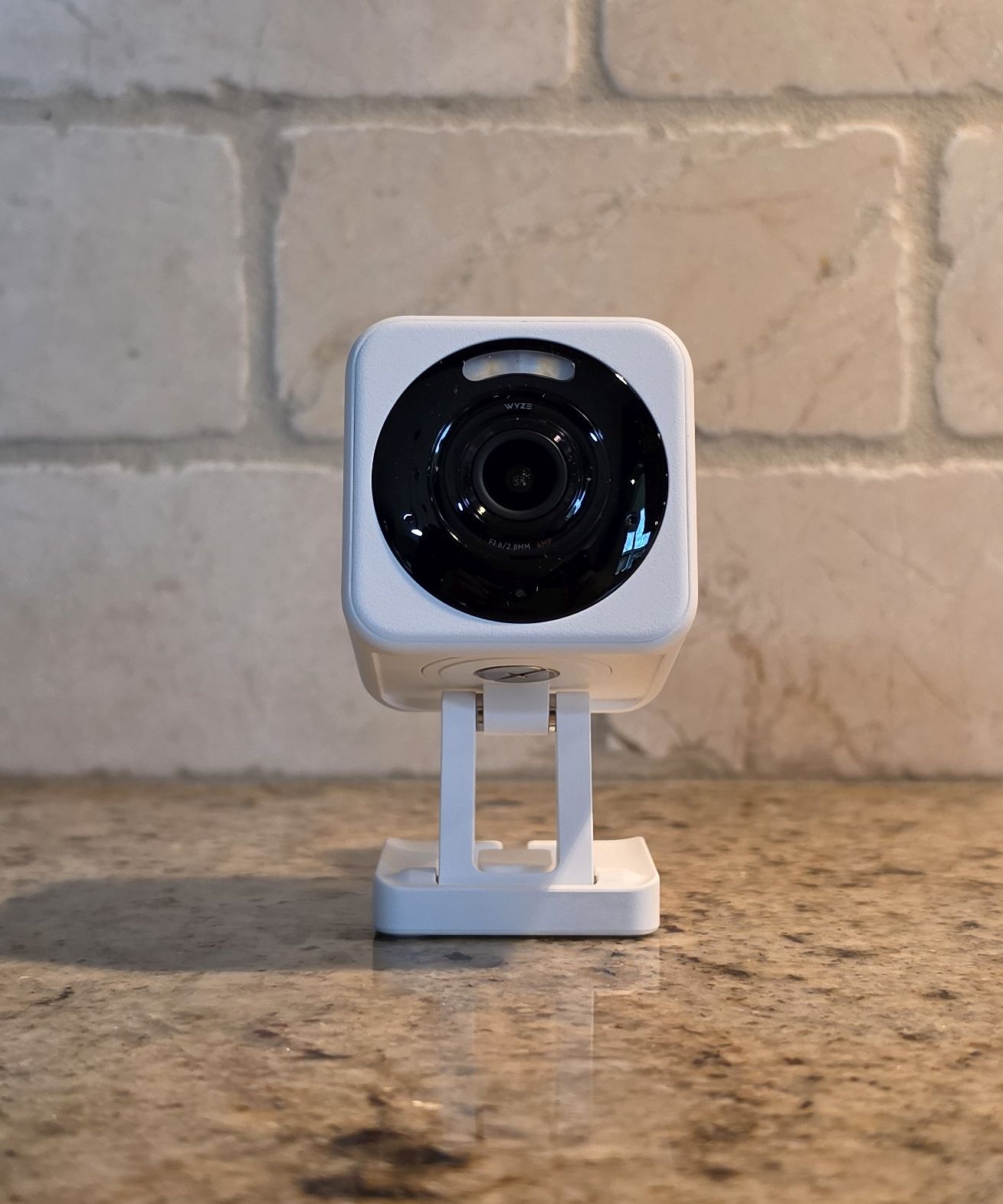
Many RVers want two jobs handled from inside the rig: keeping an eye on dogs when stepping out for dinner, and watching the campsite picnic table or generator without mounting anything outside the camper. The wired Wyze Cam v4 is our top compact plug-in choice for both tasks because it runs on low-draw 5V USB power (working on either shore power or a standard 12V cabin USB outlet), records 24/7 continuously to a microSD card up to 512GB with zero monthly fee, and includes a 2.5K QHD sensor, 2.4 GHz Wi-Fi 6, a 72-lumen spotlight, and a loud 99 dB siren.
Because the Wyze Cam v4 uses pixel-based motion analysis rather than a heat-sensing PIR sensor, it can detect movement outside through RV window glass, something battery-powered PIR cameras like Blink cannot do (see our guide on using a Blink camera through a window for why PIR sensors fail behind glass). Pair the v4 with the Official Wyze Window Mount so the lens presses flush against the pane, then open the Wyze app and turn Night Vision IR lights and the status LED off to prevent glass glare. Thanks to its color Starlight sensor, ambient campground light is often enough to keep the exterior scene visible at night.
The trade-off is smart alerts: while basic motion alerts and 24/7 microSD recording are completely free, Person, Pet, and Vehicle AI tagging require a paid Wyze Cam Plus subscription. Its IP65 weather rating also means you can set it outside under an awning if you have an exterior 120V GFCI outlet.
View Wyze Cam v4 on Amazon → Read Our Wyze Cam v4 Review →
6. Ring Outdoor Cam Plus (Battery): Best Ring Camera for RV Owners
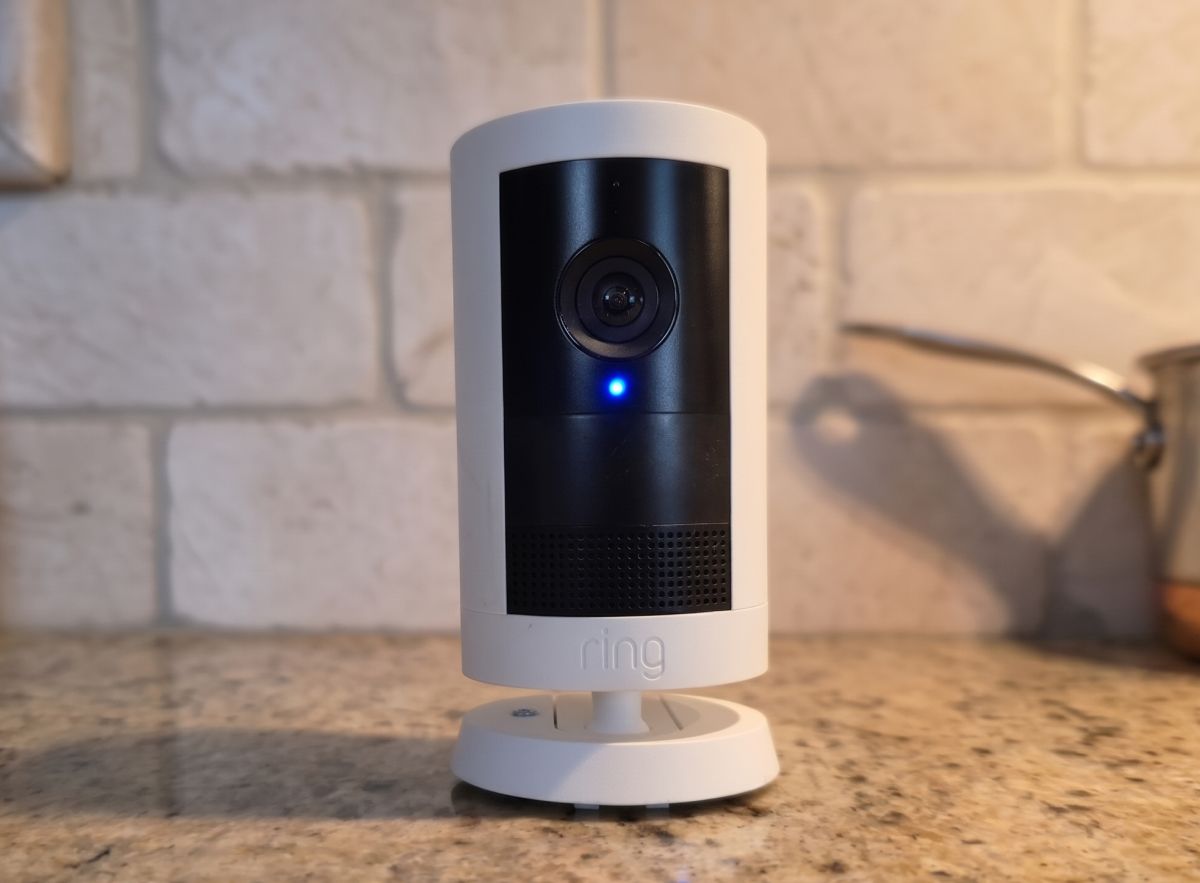
If your primary home already runs Ring doorbells, floodlights, or Echo Show displays, adding a separate camera app just for your camper creates unnecessary friction. The Ring Outdoor Cam Plus (Battery) gives existing Ring households a versatile 2K (2560 x 1440) camera with a wide 160-degree diagonal field of view, dual-band Wi-Fi 6, and Low-Light Sight color night vision that performs well around dimly lit RV parks.
In our testing, the included flat stand made it simple to set the Outdoor Cam Plus on an RV dinette table or dashboard indoors without drilling, or attach it outside using its weather-resistant bracket. Because it uses Ring’s removable Quick Release battery pack, you can keep a spare charged pack in a drawer and swap power in seconds without unplugging your setup. One setup tip from our test unit: scan the QR code on the back before locking the camera into any bracket, because the code becomes blocked once mounted.
Understand the subscription cost up front. Ring cameras have zero onboard microSD storage, so without a paid plan you only get Live View and basic motion notifications with no saved clips. Also note that Ring Multi plans cover unlimited cameras at a single address; check our Ring Protect plan breakdown to verify whether your RV camera needs its own Solo location plan when traveling away from your home address.
View Ring Outdoor Cam Plus on Amazon → Read Our Ring Outdoor Cam Plus Review →
7. TP-Link Tapo D225: Best No-Subscription RV Doorbell Camera
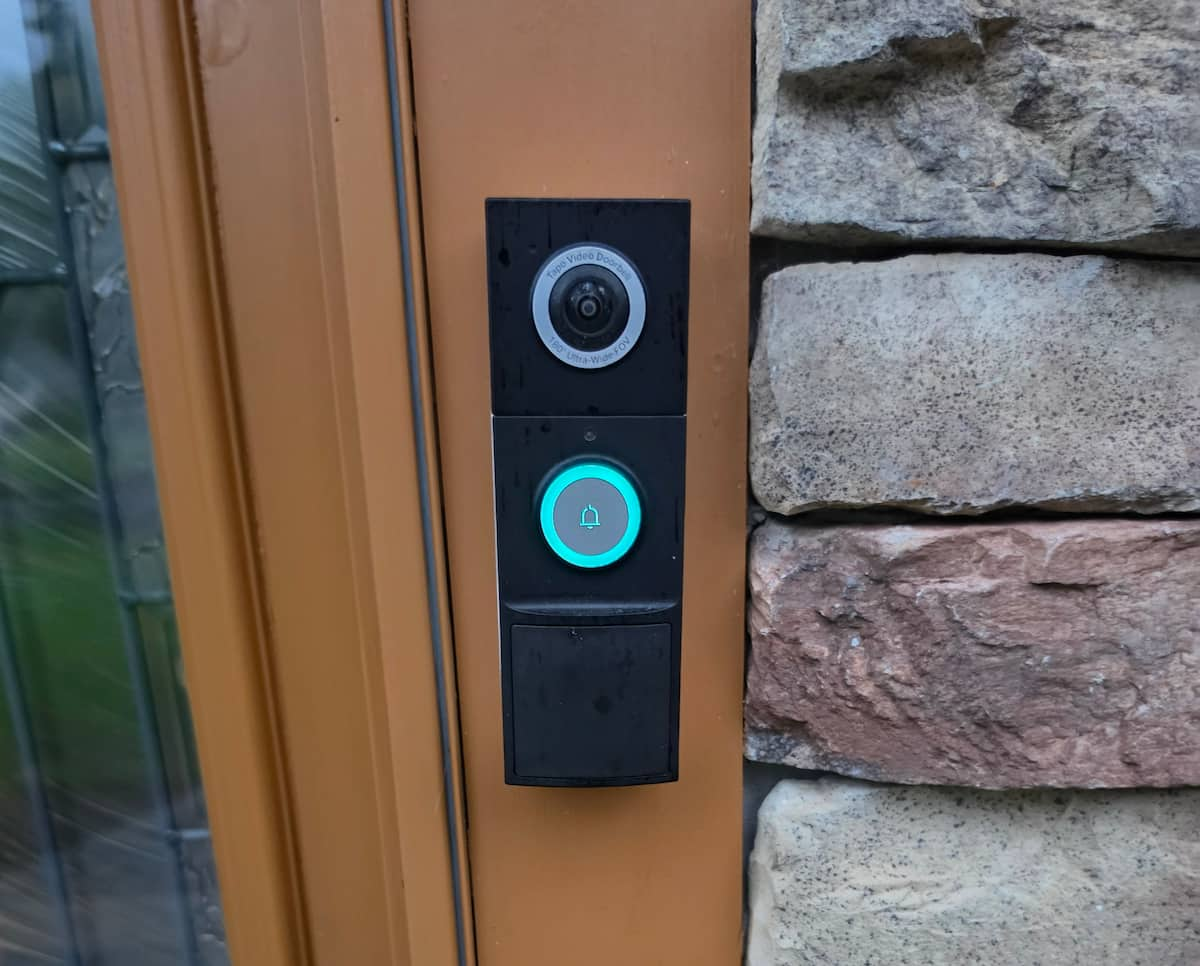
Most campers have a single entry door right next to the steps and basement storage bays, which makes a battery video doorbell one of the cleanest ways to watch visitors, camp hosts, and delivery drivers. The TP-Link Tapo D225 earned a 4.5 out of 5 in our front-door testing thanks to its 180-degree head-to-toe 2K QHD field of view, built-in spotlight color night vision, 10,000mAh rechargeable battery (rated up to 8 months), and included plug-in indoor chime.
For RV use, three features put the D225 ahead of cloud-locked doorbells. First, person, pet, package, and vehicle AI detection are free on-device with local microSD recording up to 512GB. Second, the Ring Call feature rings your smartphone like an incoming call when someone presses the button, which is much faster than tapping a tiny push notification. Third, the included plug-in indoor chime works in any standard 120V RV outlet while on shore power or inverter power, and if you ever hardwire the unit to an 8 to 24V AC transformer at a permanent cabin or park model, it also unlocks 24/7 continuous recording and 4-second Pre-Roll footage (battery mode uses standard motion-triggered clips to conserve power).
Keep two caveats in mind for RV entry doors: the D225 is chunky (nearly 6 inches tall and 1.5 inches deep), so check swing clearance around outward-opening RV screen doors and exterior grab handles before attaching it, and note that its Wi-Fi radio is 2.4 GHz only.
View Tapo D225 on Amazon → Read Our Tapo D225 Review →
RV Security Camera Buying Factors: Power, Weather & Travel Days
Camp Mode vs. Highway Travel
Residential security cameras are weather-rated (typically IP55 to IP66) for falling rain and backyard wind, not 65 mph highway rainstorms, road vibration, or low campground tree branches. Treat exterior wireless cameras as camp-mode gear: attach them with quick-release hardware once you level the rig, and stow them inside a storage bin on travel days. Only interior window-mounted cameras or permanently sealed low-profile housings should stay in place while rolling.
Power Draw on 12V House Batteries vs. Shore Power
A single USB-powered interior camera like the Wyze Cam v4 draws roughly 2 to 4 watts, which is tiny on 30A or 50A shore power but adds up over several days of boondocking when combined with a Starlink dish or cellular router. For off-grid dry camping, self-contained battery or solar cameras (such as the Defender Frontier 4G, Tapo C425, Blink Outdoor 2K+, eufy 4G LTE Cam S330, or our tested Aosu SolarCam T2 Pro) keep zero load on your coach battery bank. Just remember that lithium-ion batteries stop accepting a charge below 32 degrees Fahrenheit, so bring rechargeable packs indoors to warm up before plugging them in during winter trips.
Local Storage & High-Endurance microSD Cards
Because cellular and campground connections drop more often than home fiber internet, onboard local storage is twice as important in a camper security system. Cameras with an in-camera microSD slot (such as the Tapo C425, Tapo D225, Wyze Cam v4, Defender Frontier 4G, and eufy 4G LTE Cam S330) keep writing motion events locally even if your hotspot drops overnight. By contrast, Blink’s Sync Module local storage still relies on an active internet connection to save clips. Skip standard smartphone memory cards and use a surveillance-rated card like the SanDisk 128GB High Endurance microSDXC Card, which is built for extreme RV temperature swings and continuous rewrite cycles. For sizing tips across 2K and 4K cameras, read our guide to selecting the right microSD card for a security camera.
Campground Privacy & Etiquette
RV sites sit much closer together than suburban houses. Angle exterior cameras downward toward your own entry steps, hitch, storage bays, and picnic pad rather than pointing across a neighbor’s campsite windows. Disable automatic loud sirens and bright floodlights in crowded RV parks at night, or narrow your Activity Zones so neighbors walking past on the camp road do not trigger spotlights every five minutes.
Frequently Asked Questions
What is the best RV security camera with no Wi-Fi?
If your rig sits in a storage lot or off-grid campsite with no Wi-Fi router, you need a 4G LTE cellular solar camera. The eufy 4G LTE Cam S330 is the most flexible pick because it supports both 4G LTE and 2.4 GHz Wi-Fi when you return to camp, while our hands-on tested Defender Frontier 4G is a strong dedicated 4G solar pan/tilt option that held reliable live feeds on one to two bars of cellular signal.
Can I connect an RV security camera to free campground Wi-Fi?
Usually no. Most campground Wi-Fi networks require clicking through a browser login page (captive portal) that security cameras cannot complete, and shared park Wi-Fi rarely offers enough upload speed for stable video alerts. Plan on connecting Wi-Fi cameras to your own Starlink router, cellular hotspot, or travel router instead.
Can I put a security camera inside my RV pointing out a window?
Yes, as long as you choose a plug-in camera that uses visual pixel-based motion detection (such as the Wyze Cam v4) rather than a battery camera that relies on a heat-sensing PIR motion detector. Press the camera close to clean glass with a window mount, turn off infrared Night Vision LEDs and status lights in the app, and keep interior lights dim behind the lens at night.
Do RV security cameras require a monthly subscription?
Not if you choose cameras with local microSD storage. The TP-Link Tapo C425, Tapo D225, and Wyze Cam v4 all record locally with zero monthly fees, and Blink Outdoor cameras record locally when paired with a Sync Module 2 or Sync Module XR (while connected to the internet). Only cloud-only cameras like Ring require a paid plan to save clips, while 4G cellular cameras require a cellular data plan for remote LTE access. Compare five-year ownership costs in our security camera subscription plans guide.
The Bottom Line
The best RV security camera system depends on where your rig spends the most time. For boondocking and unpowered storage lots with no internet, pick the eufy 4G LTE Cam S330 (if you want dual Wi-Fi plus 4G switching) or our hands-on tested Defender Frontier 4G (if you want a dedicated 4G solar pan/tilt camera that stays responsive on weak signal). If you already travel with Starlink or a mobile hotspot, pair a TP-Link Tapo C425 (or Blink Outdoor 2K+) outside at camp with a Wyze Cam v4 inside for pets and 24/7 microSD recording, and add a Tapo D225 at the entry door if you want head-to-toe visitor alerts with no monthly fees.
Exploring more setups for home and travel? Browse our tested roundups for the best security cameras without a subscription, our best solar security cameras guide, and our best outdoor security cameras hub.