
Deciding between Tapo vs Ring comes down to one fundamental split in home security: owning your recordings locally with zero required monthly bills, or paying an ongoing cloud subscription for a polished Amazon Alexa ecosystem. Whether you are weighing Ring vs Tapo for outdoor solar and battery cameras, indoor pan-and-tilt cameras, or a front-door video doorbell, we have owner-tested hardware across both lineups, including a direct same-door test between the TP-Link Tapo D225 and the Ring Battery Doorbell 2K.
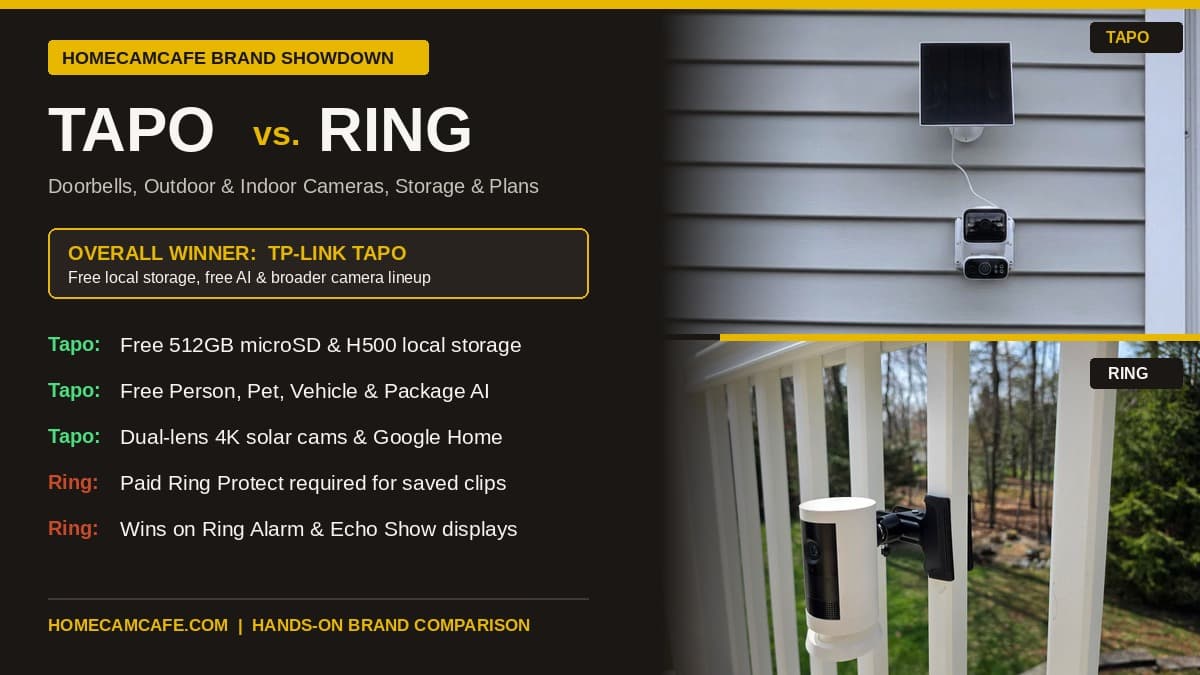
Quick Answer: TP-Link Tapo is the better overall choice for most homeowners because every current Tapo camera and doorbell includes free on-device AI detection, free local microSD storage up to 512GB, optional Tapo H500 hub storage, and Google Home plus Alexa support. Ring only wins if you want a professionally monitored Ring Alarm system in the same app, rely heavily on Amazon Echo Show screens and Alexa+ Greetings, and are comfortable paying for a Ring Protect subscription every year to save video clips.
Tapo vs Ring at a Glance
Before breaking down our hands-on doorbell, outdoor, and indoor camera matchups, here is how TP-Link Tapo and Ring compare across the core ecosystem features that shape daily use and five-year ownership costs.
| Category | TP-Link Tapo | Ring |
|---|---|---|
| Subscription Required? | No (free local recording and onboard AI detection) | Yes (required for any saved video history or AI alerts) |
| Local Storage | Up to 512GB microSD card or Tapo H200 / H500 Smart HomeBase (up to 16TB SATA) | None on standard cameras (Ring Edge requires Ring Alarm Pro + Ring Pro plan) |
| Free AI Detection | Person, pet, vehicle, and package (model-dependent); local Face AI via H500 or C260 | Basic motion alerts only; Person, Package, and Vehicle Smart Alerts require Ring Protect |
| Multi-Camera Cloud Plan | Tapo Cloud Advanced: $11.99/mo or $119.99/yr (unlimited devices, up to 180 days) | Ring Multi: $9.99/mo or $99.99/yr (unlimited devices at 1 address, up to 180 days) |
| 24/7 Continuous Recording | Free locally on wired cameras and hardwired Tapo D225 doorbell | Paid add-on ($3/mo per eligible wired camera on top of Ring Protect; 14-day max) |
| Smart Home Ecosystems | Amazon Alexa, Google Assistant, RTSP/ONVIF on wired cams, Matter (Beta) via H500 | Amazon Alexa and Echo Show only (no Google Home live video, no HomeKit, no RTSP) |
| Professional Monitoring | Self-monitored only | Available via Ring Alarm + Ring Pro ($19.99/mo or $199.99/yr) |
Tapo vs Ring Doorbell: Same-Door Head-to-Head (Tapo D225 vs. Ring Battery Doorbell 2K)
The fairest way to evaluate a Tapo vs Ring doorbell matchup is to put both units in the exact same spot under identical network conditions. We mounted the Ring Battery Doorbell 2K (2.5 / 5.0) directly above our TP-Link Tapo D225 (4.5 / 5.0) on the same front door trim, roughly 20 feet from the exact same eero 7 mesh puck. Both doorbells are 2.4 GHz-only wireless devices, which removed router placement, wall material, and Wi-Fi band differences as variables.
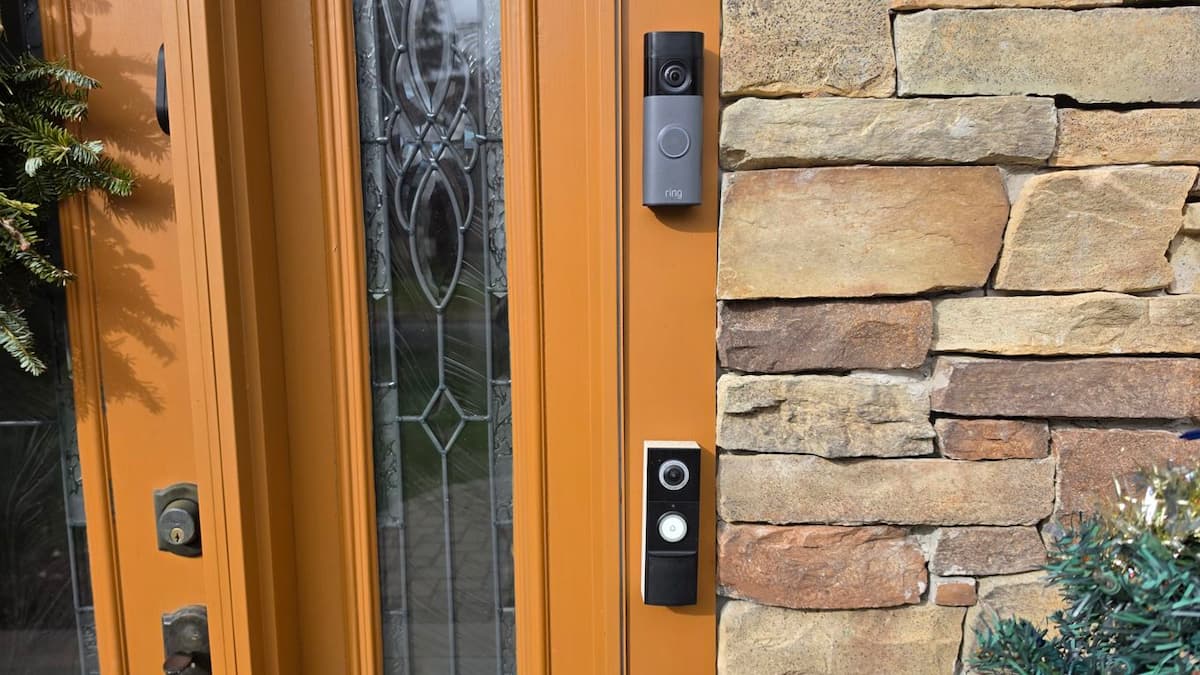
The performance gap was obvious and significant. On the exact same trim 20 feet from the eero mesh node, the Ring Battery Doorbell 2K reported an RSSI of -62 dBm, triggered infinite Live View loading spins on both our phone and tablet, and suffered severe mid-clip bitrate collapse during bright daytime recordings that turned crisp Retinal 2K footage muddy. Even dropping Ring’s resolution setting down to 1080p failed to fix the Live View wake-up stalls. Meanwhile, the 2.4 GHz Tapo D225 mounted inches below it connected reliably, loaded Live View quickly, and delivered consistent 2K QHD clips without mid-recording compression meltdowns. (If you are troubleshooting a 2.4 GHz doorbell near thick masonry or stucco, our 2.4 GHz Wi-Fi setup guide walks through channel width and placement fixes.)
Hardware design and included accessories also tilt heavily toward Tapo. The Tapo D225 ships with an indoor plug-in chime in the box, adds a white LED ring around the button for color night vision, expands to a 180-degree diagonal head-to-toe view, and supports up to 512GB of local microSD storage (or centralized recording to a Tapo H500 hub). When hardwired to an 8 to 24V AC (10VA minimum) transformer with the included jumper, the Tapo D225 unlocks true 24/7 continuous Always-On Mode plus 4-second pre-roll capture at zero monthly cost. By contrast, hardwiring the base Ring Battery Doorbell 2K only trickle-charges its non-removable built-in battery, Ring does not include a plug-in chime or USB-C charging cable in the box, and you must pay for Ring Protect just to play back missed visitors.
Where Ring still earns credit at the front door is app polish and higher-tier hardware. Ring’s app is intuitive, its top-lip mounting bracket snaps cleanly into place, and its Smart Responses (including Quick Replies and Alexa+ Greetings on paid plans) are stronger than Tapo’s voice replies. If you are set on Ring for your front door, skip the 2.4 GHz-only Battery Doorbell 2K and step up to the Ring Battery Doorbell 2K Plus, which upgrades to dual-band Wi-Fi 6, a removable Quick Release Battery Pack, and Low-Light Sight color night vision, or move up to a hardwired Pro model.
| Doorbell Feature | TP-Link Tapo D225 | Ring Battery Doorbell 2K |
|---|---|---|
| HomeCamCafe Score | 4.5 / 5.0 | 2.5 / 5.0 |
| Video Resolution & View | 2K QHD (4MP), 180-degree diagonal 4:3 view | Retinal 2K (1920 x 1920), 140-degree H x 140-degree V |
| Wi-Fi Band & Same-Door Test | 2.4 GHz only; steady Live View and clean 2K clips | 2.4 GHz only; -62 dBm RSSI, Live View spins, mid-clip blur |
| Hardwired 24/7 Recording | Yes (Always-On Mode + 4s pre-roll; requires 8 to 24V AC, 10VA min; bypasses wall chime) | No (hardwiring only trickle-charges the built-in battery) |
| Included Chime | Yes (plug-in wireless chime in the box) | No (Ring Chime sold separately) |
| Local Storage & AI Alerts | Free up to 512GB microSD / H500 Hub + free Person/Pet/Vehicle/Package AI | None without Ring Protect ($4.99/mo Solo or $9.99/mo Multi) |
View Tapo D225 on Amazon → View Ring Battery Doorbell 2K Plus on Amazon →
Tapo vs Ring Camera Lineups: Outdoor and Indoor Matchups
Moving away from the front door, the gap between Tapo and Ring becomes a question of hardware variety versus ecosystem lock-in. Both brands sell capable 2K and 4K cameras, yet Tapo covers far more specialized form factors without forcing a monthly fee.
Outdoor Battery and Solar Cameras
On Ring’s side, our hands-on Ring Outdoor Cam Plus review (4.0 / 5.0) showed Ring at its best. It delivers crisp 2K (2560 x 1440) video, Low-Light Sight color night vision that holds color well with minimal ambient light, dual-band Wi-Fi 6, and four flexible power choices (battery, plug-in, solar, or PoE). Its removable Quick Release battery pack is also convenient when you do not want to pull the whole camera down to recharge.
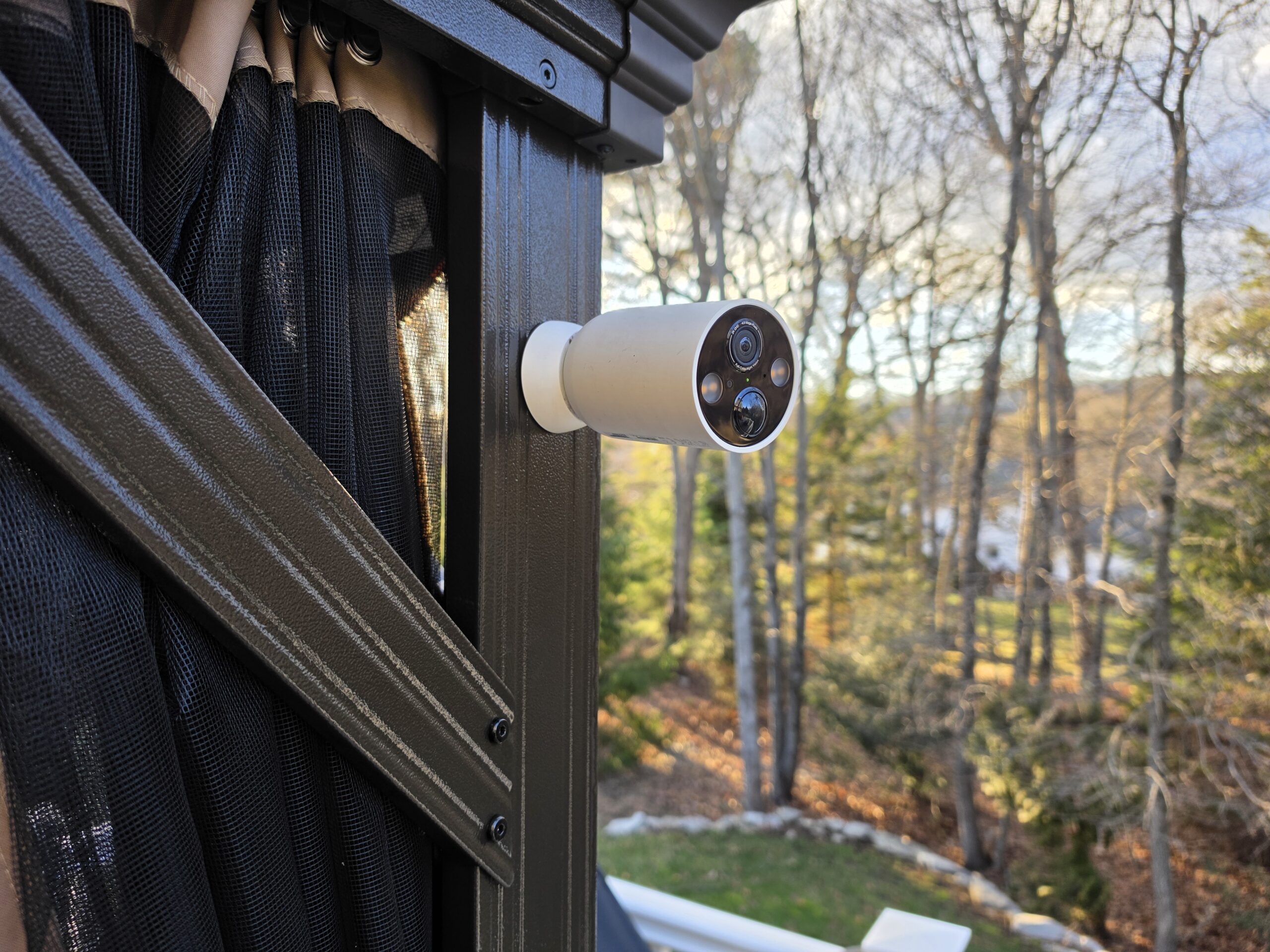
TP-Link Tapo answers with two strong outdoor options we have personally tested: the Tapo C425 MagCam (4.5 / 5.0) and the dual-lens Tapo C675D KIT (4.5 / 5.0). The Tapo C425 pairs a magnetic mount and 10,000mAh battery (rated up to 300 days) with 2K QHD Starlight color night vision, free person/pet/vehicle AI, and a 512GB microSD slot. If you want longer driveway reach or automated tracking, Ring does not sell a dual-lens solar pan-and-tilt camera to rival the Tapo C675D KIT, which combines dual 4K lenses, dual-band 5 GHz Wi-Fi, and an included solar panel. TP-Link rates C675D detection up to 60 feet, and in our driveway test with 24/7 Continuous Capture enabled on a microSD card it picked up movement out to roughly 100 feet (or you can step down to the single-lens Tapo C660 KIT for a cleaner single-bracket solar mount).
View Tapo C425 on Amazon → View Tapo C675D KIT on Amazon → View Ring Outdoor Cam Plus on Amazon →
Indoor Security Cameras
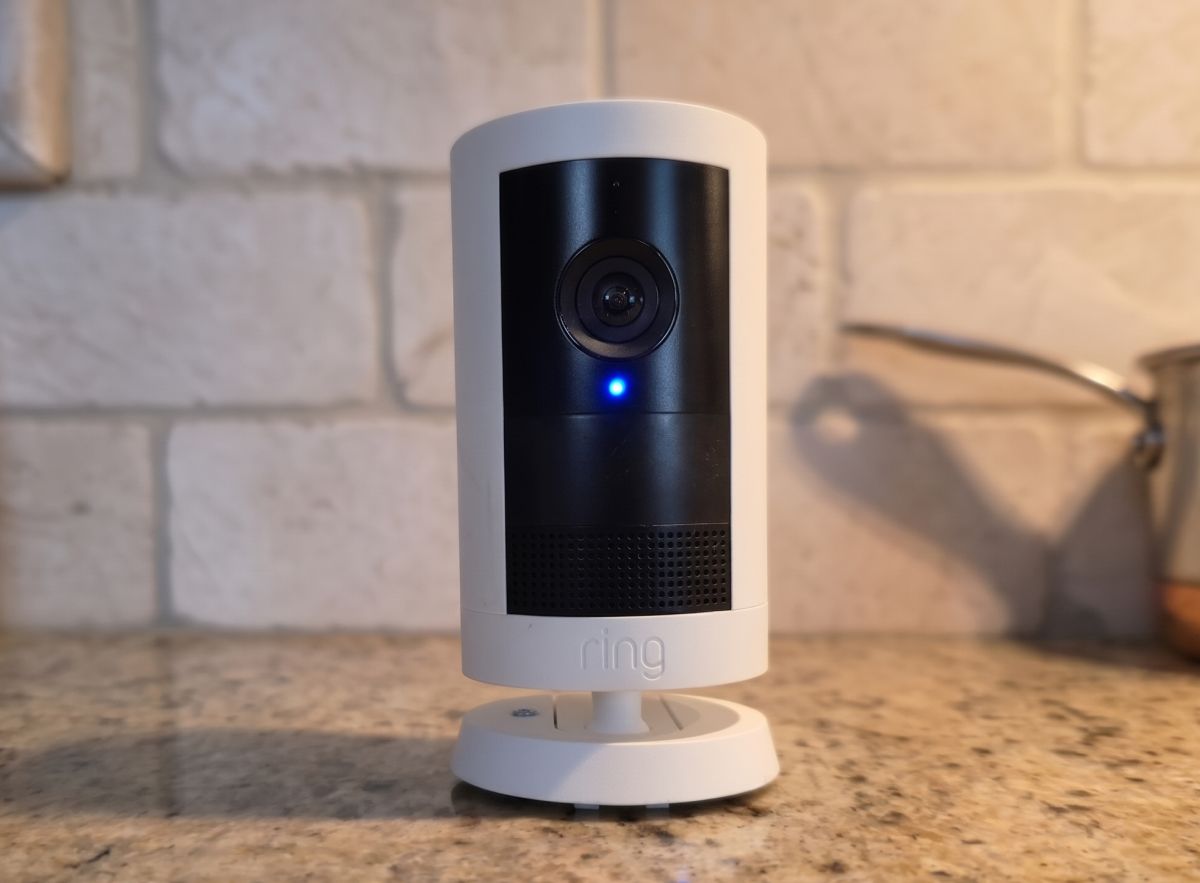
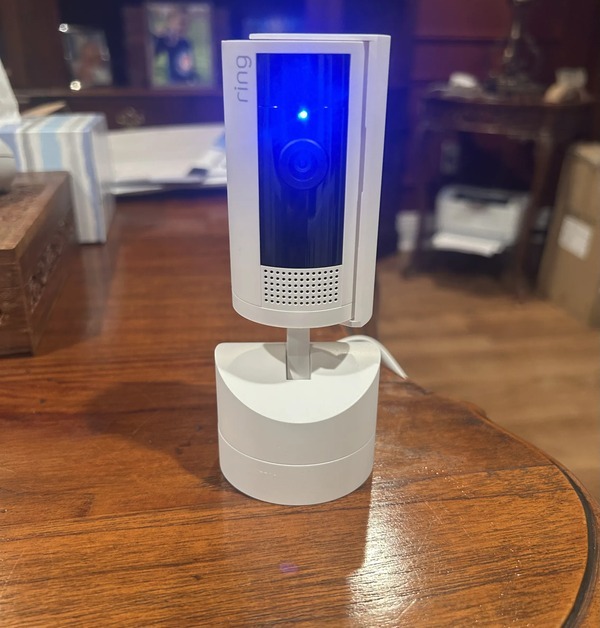
Indoors, Ring’s main appeal is its manual privacy cover and zero incremental monthly cost if you already subscribe to Ring Multi. For motorized room coverage, we owner-tested the Ring Pan-Tilt Indoor Camera, which pairs 360-degree panning with a manual swivel privacy cover that turns off both the lens and microphone. If you prefer sharper 2K video in a fixed plug-in unit, our Ring Indoor Cam Plus review (also sold by Ring as the Ring Indoor Cam 2K) notes one privacy quirk: sliding its lens cover shut blocks video while leaving the microphone active unless disabled in the Ring app.
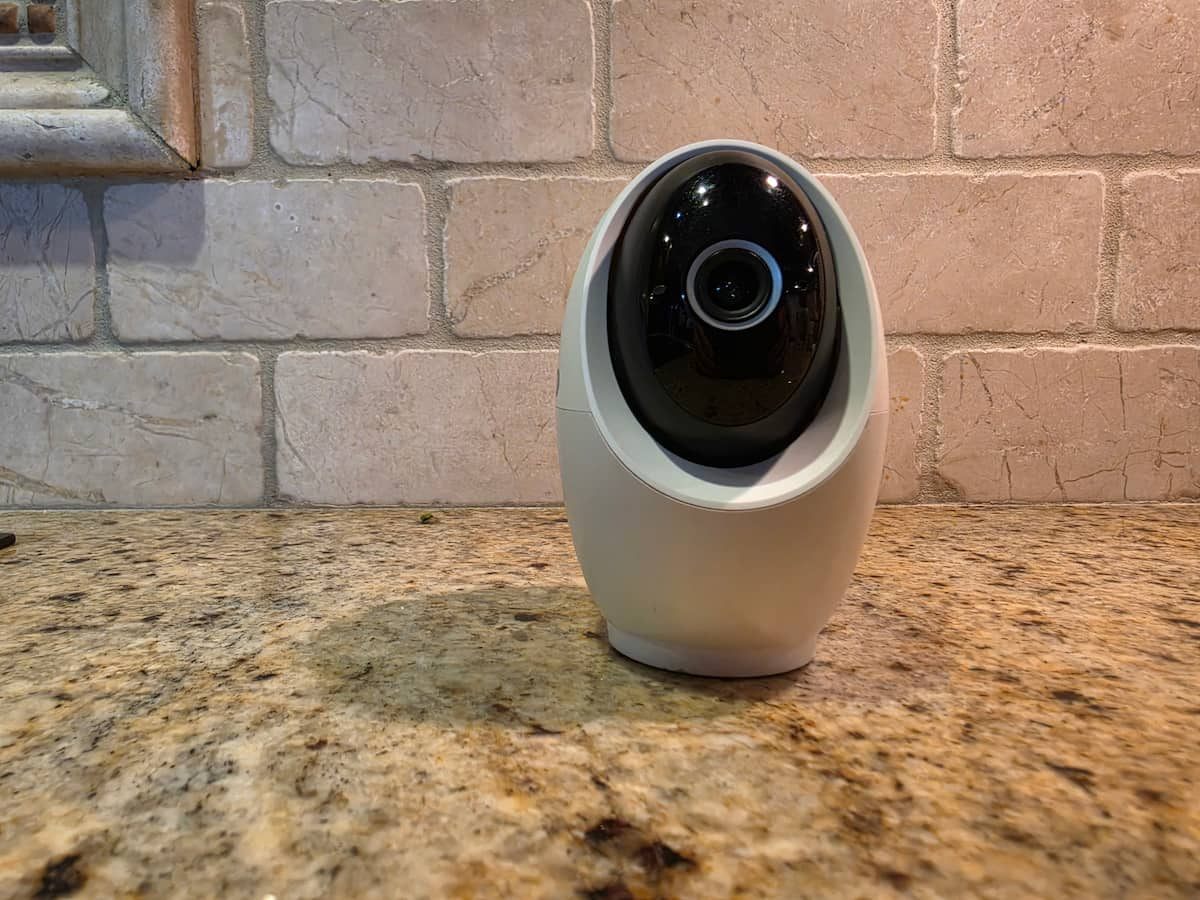
For buyers not already tied to Ring Multi, Tapo dominates indoor value and technical capability. Our tested Tapo C260 packs 4K 8MP resolution, 360-degree motorized pan-and-tilt tracking, dual-band 5 GHz Wi-Fi, free local facial recognition, a motorized Physical Privacy Mode that hides the lens inside the housing, invisible infrared night vision, 512GB microSD support, and RTSP/ONVIF streaming for PC or NVR viewing. Even Tapo’s entry-level indoor models include free local recording and onboard person detection, whereas Ring indoor cameras become live-view-only monitors without a paid Ring Protect plan.
View Tapo C260 4K on Amazon → View Ring Indoor Cam Plus on Amazon →
Storage and Subscription Costs: Tapo Care vs. Ring Protect
This is where the long-term math separates the two ecosystems. As we detail in our guide on whether Ring works without a subscription, standard Ring cameras and doorbells save zero video clips once the 30-day free trial ends. You keep Live View, two-way talk, basic motion alerts, and customizable Motion Zones, while all saved recordings, video downloads, and Person, Package, and Vehicle Smart Alerts lock behind a Ring Protect plan.
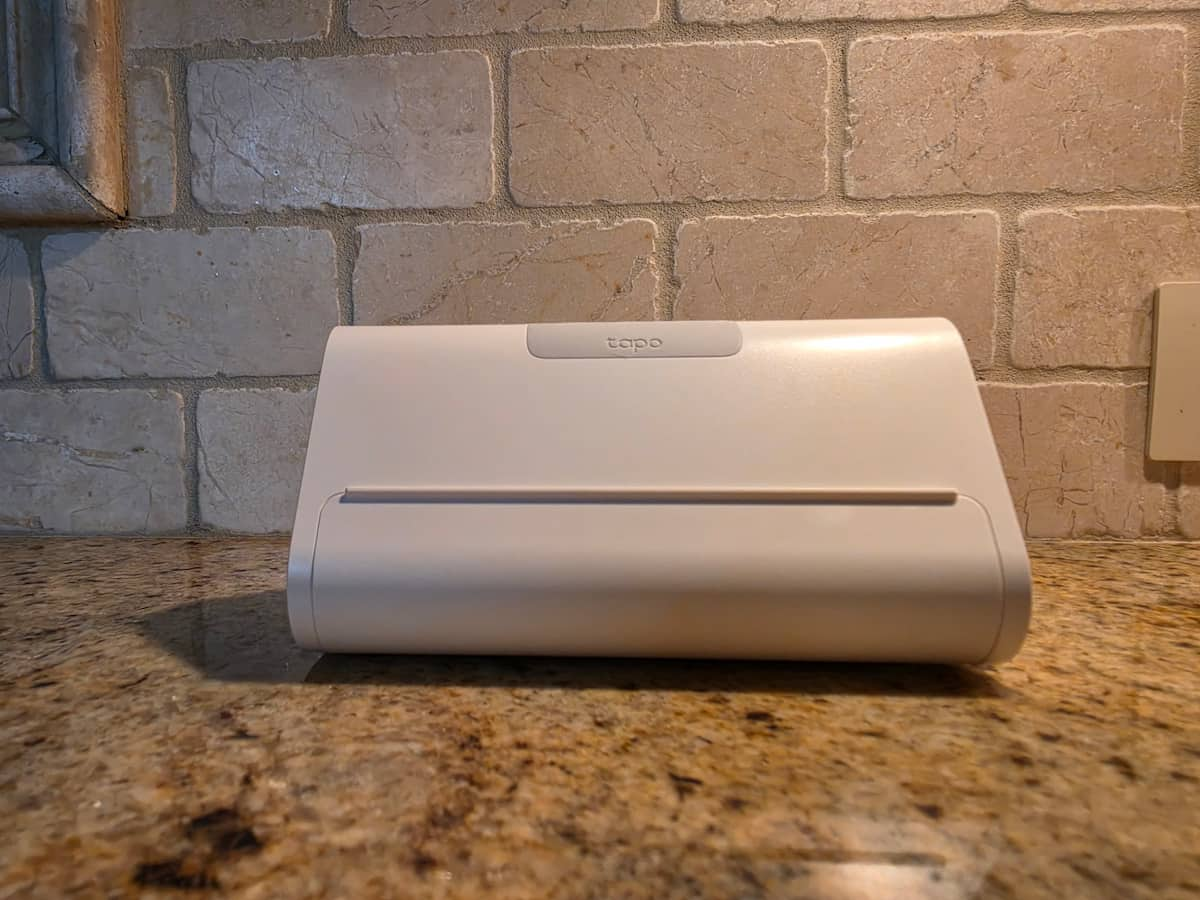
Tapo flips that model completely. You can run an entire Tapo system for $0 per month using high-endurance microSD cards or by pairing up to 16 cameras with our tested Tapo H500 Smart HomeBase, which accepts a 2.5-inch SATA SSD up to 16TB, keeps footage safely indoors, adds local AI facial recognition, and includes an HDMI port for a live 4-camera monitor feed. Keep in mind that while the H500 connects up to 16 cameras overall, it caps 24/7 continuous recording at 4 cameras and local Face AI Empowerment at 6 camera channels (dual-lens models like the C675D count as 2 channels). See our Tapo Care vs. Tapo Hub vs. microSD card breakdown for a full local-versus-cloud walkthrough. If you still want off-site cloud backup, our Tapo Care plans breakdown shows that Tapo’s cloud pricing is competitive with Ring, though Ring Multi edges Tapo Cloud Advanced by $20 per year for unlimited cameras.
| Plan Tier | US Pricing | Devices Covered | Cloud History & Highlights |
|---|---|---|---|
| Tapo Local Only | $0/mo | All Tapo cameras | Up to 512GB microSD or 16TB H500 SATA; free onboard AI |
| Tapo Cloud | $3.49/mo or $34.99/yr | Up to 2 devices | 30 days (up to 2K) + rich snapshot notifications |
| Tapo Cloud Advanced | $11.99/mo or $119.99/yr | Unlimited compatible devices | Up to 180 days (up to 4K) + enhanced playback |
| Tapo Cloud Advanced AI | $19.99/mo or $199.99/yr | Unlimited compatible devices | Up to 180 days + Aireal AI video search, summaries, cloud Face AI |
| Ring Protect Solo | $4.99/mo or $49.99/yr | 1 camera or doorbell | Up to 180 days + Person, Package & Vehicle Smart Alerts (+$5/mo Pro Intelligence optional) |
| Ring Protect Multi | $9.99/mo or $99.99/yr | Unlimited devices at 1 address | Up to 180 days + extended warranty + Multi-Cam Live View (+$5/mo/cam Pro Intelligence optional) |
| Ring Protect Pro | $19.99/mo or $199.99/yr | Unlimited devices at 1 address | Up to 180 days + 24/7 Ring Alarm professional monitoring + Pro Intelligence included |
Important: Over five years, a multi-camera Ring Multi subscription adds $499.95 on top of your hardware cost, while a single Ring doorbell on Solo adds $249.95. You can plug your exact camera count into our 5-year security camera subscription calculator to see how quickly local Tapo storage pays for itself.
View Tapo H500 Smart HomeBase on Amazon →
App Experience, Smart Home Support, and Ecosystem Trade-Offs
Both apps are reliable for everyday viewing, though they serve different priorities. Ring’s app feels slightly more refined for casual users who want clean event timelines, Neighbors community alerts, and instant picture-in-picture pop-ups on Amazon Echo Show and Fire TV screens. Ring also offers a full DIY home security system (Ring Alarm) with door sensors, glass-break sensors, cellular backup, and 24/7 professional dispatch inside the same app, something TP-Link Tapo does not match.
TP-Link Tapo gives power users and mixed-platform households far more freedom. Tapo cameras stream to both Amazon Alexa and Google Nest Hub displays, let you scrub continuous 24/7 microSD timelines with zero cloud delay, and support local RTSP and ONVIF streams on wired and indoor models for third-party NVRs or desktop monitoring. Neither brand offers native Apple HomeKit support on its mainstream cameras, though Tapo’s H500 hub includes a Matter (Beta) bridge for Tapo Sub-GHz door and window sensors.
Who Should Buy Tapo vs. Who Should Buy Ring
Choose TP-Link Tapo if:
- You want zero mandatory monthly fees with free local microSD storage (up to 512GB) and free on-device AI alerts.
- You want a reliable front-door video doorbell with an included plug-in chime and free 24/7 hardwired recording (Tapo D225).
- You need specialized outdoor hardware Ring does not make, such as dual-lens 4K solar pan-and-tilt tracking (Tapo C675D KIT) or a centralized 16TB local hub with HDMI output (Tapo H500).
- Your household uses Google Nest Hub displays, or you want RTSP/ONVIF support on wired and indoor cameras.
Choose Ring if:
- You already pay for Ring Protect Multi ($99.99/year) or Ring Pro ($199.99/year) and want to add more cameras at the same address for $0 extra per month.
- You want a unified Ring Alarm system with optional 24/7 professional emergency monitoring in the same app as your cameras.
- Your home revolves around Amazon Echo Show displays, Alexa routines, and paid Smart Responses like Alexa+ Greetings.
- You prefer Ring’s step-up hardware like the Ring Outdoor Cam Plus or Ring Battery Doorbell 2K Plus rather than the entry-level Battery Doorbell 2K.
Frequently Asked Questions
Is Tapo better than Ring without a subscription?
Yes, by a wide margin. Without a paid plan, Tapo cameras and doorbells still record motion events (and 24/7 video on wired models) to a local microSD card or Tapo Hub while keeping free person, pet, and vehicle detection. Without a Ring Protect plan, standard Ring cameras provide Live View and motion notifications only, with zero saved video history.
Which doorbell is better: Tapo D225 or Ring Battery Doorbell 2K?
In our same-door head-to-head test, the TP-Link Tapo D225 won decisively. It held a steady 2.4 GHz connection where the Ring Battery Doorbell 2K stalled on Live View and dropped video bitrate mid-clip, includes a wireless chime in the box, offers a wider 180-degree view, and records locally for free.
How does Tapo vs Ring vs Eufy compare?
Tapo and Eufy both beat Ring on subscription-free local storage and free onboard AI detection. Tapo holds an edge over Eufy on lower hardware pricing, wider wired and budget indoor camera selection, and RTSP/ONVIF support on plug-in models, while Eufy stands out for select Apple HomeKit indoor cameras and built-in HomeBase storage bundles. Browse our Eufy security camera reviews hub to compare individual Eufy models.
Which brand is cheaper if I want cloud storage for multiple cameras?
Ring Multi is $20 per year cheaper than Tapo Cloud Advanced ($99.99/year vs. $119.99/year) for unlimited cameras at one address with up to 180 days of event history. For one or two cameras, however, Tapo Cloud ($34.99/year for up to two devices) beats Ring Protect Solo ($49.99/year for one device), and Tapo also lets you skip cloud fees entirely whenever you want.
Do Tapo or Ring cameras work with Google Home and Apple HomeKit?
TP-Link Tapo cameras work with both Amazon Alexa and Google Assistant displays. Ring cameras integrate natively with Amazon Alexa and Echo Show only, with no Google Home live video streaming. Neither brand supports native Apple HomeKit on its mainstream cameras.
Final Verdict: Tapo vs Ring
Bottom Line: TP-Link Tapo wins the Tapo vs Ring comparison for most buyers. It eliminates mandatory monthly fees with 512GB microSD and Tapo H500 local storage, outperformed Ring’s entry 2K doorbell on our exact same front door, offers dual-lens 4K solar tracking Ring cannot match, and works with both Alexa and Google Home. Choose Ring only if you want a professionally monitored Ring Alarm system in one app, rely heavily on Amazon Echo Show displays, and plan to keep an active Ring Protect Multi or Pro plan year after year.
Explore more hands-on hardware tests in our TP-Link Tapo security camera reviews hub, our Ring security camera reviews hub, and our best security cameras without a subscription guide. For more head-to-head ecosystem matchups, see our Aosu vs. Ring comparison and our Ring vs. Blink breakdown.